
Oceans, Heat and the Rising Risk of Extreme Weather
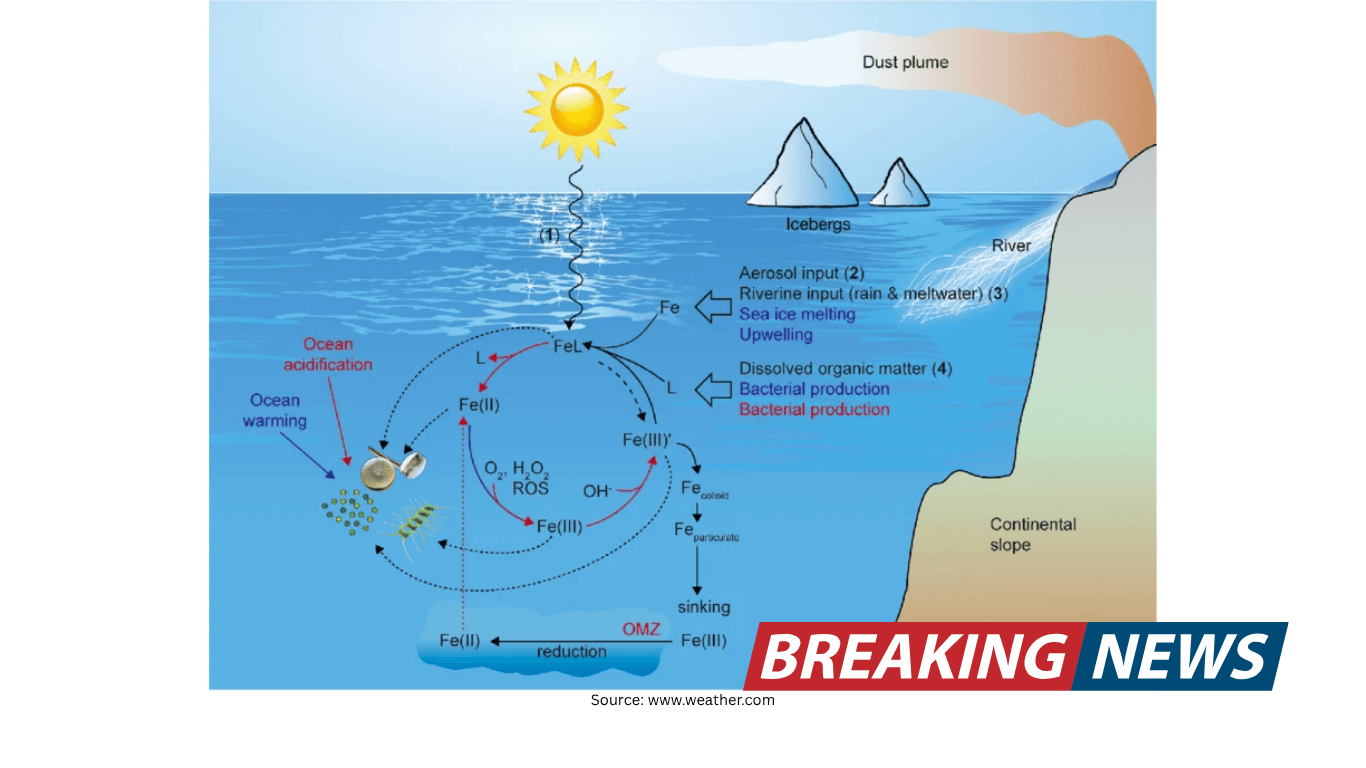
Oceans as Earth’s heat reservoir
When people think about weather, they often picture what is happening in the sky: clouds building, winds shifting, storms forming. Yet a growing body of research and forecasting practice points to a powerful driver that sits below the horizon line—Earth’s oceans. A new study has highlighted this connection by reporting that the oceans absorbed more heat than ever before in 2025. That finding matters because the ocean is not just a backdrop to the atmosphere; it is a vast heat reservoir that can shape how much energy the atmosphere has available to work with.
In practical terms, ocean heat absorption is a way of describing how much extra warmth the oceans take in and store. The study’s central message is straightforward: the oceans’ record heat uptake in 2025 is “supercharging” the atmosphere. In weather language, supercharging means increasing the energy in the system, which can raise the potential for extreme outcomes. The study links this heightened heat absorption to extreme weather occurring around the world.
While day-to-day forecasts focus on near-term changes in temperature, pressure and moisture, the ocean’s heat content is part of the broader context that can influence how weather behaves. The study’s findings reinforce why ocean conditions are closely watched in modern meteorology and climate monitoring: what the ocean stores does not stay isolated from the atmosphere.
What it means when oceans absorb “more heat than ever”
The study’s key point—that the oceans absorbed more heat than ever before in 2025—signals an extraordinary level of heat uptake. The ocean’s ability to absorb heat is immense, and it can store energy over time. When that stored heat is elevated, it can influence the atmosphere above it, affecting how weather systems develop and intensify.
Heat in the ocean can be thought of as fuel. It does not automatically create a specific storm on a specific day, but it can raise the ceiling on what is possible, particularly when other ingredients align. The study frames this as a global phenomenon, connecting the record heat absorption to extreme weather “all over the world.” That phrasing emphasizes breadth: the consequences are not confined to one basin or one coastline.
Importantly, the study’s focus is not limited to surface warmth alone. Ocean heat absorption implies energy being taken into the ocean system, which can affect the exchange of heat and moisture with the atmosphere. This exchange is one of the fundamental processes that can add power to weather systems.
How ocean heat can “supercharge” the atmosphere
The atmosphere responds to energy. When the ocean holds more heat, it can contribute to a more energized atmosphere through air-sea interactions. This is what the study describes as supercharging: the ocean’s extra heat helps load the atmosphere with additional energy that can support more intense weather behavior.
There are two broad ways this influence is often understood in forecasting contexts:
Energy transfer: Warmer ocean conditions can increase the amount of heat available at the ocean surface, which can be transferred to the air above under the right conditions.
Moisture support: An energized ocean-atmosphere boundary can also support processes that help weather systems organize and intensify, particularly when moisture and instability are involved.
The study’s summary ties these ideas together by stating that the record heat absorption is aiding extreme weather. In other words, the ocean is not merely warming in isolation; its heat is part of a chain of influence that can shape the atmosphere’s capacity to produce extremes.
Extreme weather as a global consequence
The study’s conclusion is not limited to one type of event. It states that the oceans’ heightened heat absorption is aiding in extreme weather “all over the world.” This global framing is significant because it points to the ocean’s role as a planetary-scale influence. Oceans cover much of Earth, and their heat content can affect atmospheric patterns and storm potential across wide regions.
Extreme weather is a broad category that can include a range of high-impact conditions. The study’s description does not single out specific hazards, but it does emphasize that the consequences of record ocean heat absorption are not abstract. They are linked to real-world extremes being experienced globally.
For audiences trying to understand why a discussion about ocean heat belongs in a conversation about storms, the study’s message offers a clear bridge: when the ocean stores more heat, the atmosphere has more energy to draw upon, and that can make extremes more likely or more intense when weather systems develop.
Why this matters for forecasting and preparedness
Forecasting is about probabilities and evolving conditions. The study’s finding—record ocean heat absorption in 2025—adds context to the environment in which forecasts are made. If the atmosphere is being “supercharged,” then forecasters and the public may need to pay closer attention to signals that point toward high-impact outcomes.
Ocean heat is not a daily weather map feature for most people, but it is increasingly central to how scientists and meteorologists interpret risk. When ocean heat content is elevated, it can become one of the background factors that helps explain why certain weather events may strengthen quickly or why the atmosphere may be primed for extremes.
This does not mean every forecast will verify as extreme, or that ocean heat alone determines what happens. Weather remains the product of many interacting variables. But the study’s framing—ocean heat absorption supercharging the atmosphere—underscores that the baseline energy available to the atmosphere matters, especially during periods when extreme weather is already possible.
What viewers are being shown: heat absorption and consequences
Alongside the study’s findings, viewers are invited to watch material that illustrates how much heat the oceans are absorbing and what the consequences are. That emphasis on visualization reflects a broader challenge in weather communication: ocean heat is a powerful concept, but it can be hard to grasp without clear comparisons or graphics.
Seeing the magnitude of heat absorption can help audiences understand why scientists treat ocean heat as a major indicator. It can also help connect the dots between an ocean-focused metric and the lived experience of extreme weather. The study’s message is that the ocean’s record heat uptake is not just a number; it is part of a mechanism that can influence atmospheric behavior.
By pairing the study with visual explanations, the material aims to make an invisible process—heat moving into the ocean—more tangible. The key takeaway is that increased ocean heat absorption has consequences, and those consequences can show up in the form of extreme weather around the world.
Ocean heat as a signal to watch
Many weather indicators are familiar: temperatures, rainfall totals, wind speeds. Ocean heat absorption is less commonly discussed in everyday conversation, but the study suggests it deserves attention. If the oceans absorbed more heat than ever before in 2025, that is a signal about the state of Earth’s energy balance and the potential for atmospheric impacts.
In forecasting and risk communication, signals matter because they help set expectations. Elevated ocean heat can be viewed as a background condition that may increase the likelihood that certain weather patterns, once they begin, have more energy available. That is what the study means by supercharging the atmosphere.
For the public, the practical value is not in memorizing technical terms, but in understanding the relationship: oceans store heat; that heat can energize the atmosphere; an energized atmosphere can support extreme weather. This chain is the core narrative the study is presenting.
Putting the study’s message in plain language
The study’s findings can be summarized without jargon:
In 2025, Earth’s oceans took in more heat than ever recorded in the study’s context.
That extra stored heat is adding energy to the atmosphere.
With more energy available, extreme weather can be aided and potentially intensified across the globe.
This is a cause-and-effect framing that helps explain why ocean monitoring is central to understanding weather risks. It also clarifies why discussions about extreme weather increasingly include ocean conditions, not just atmospheric ones.
The study does not present ocean heat as a standalone explanation for every extreme event. Instead, it positions ocean heat as a powerful contributor—an amplifier—capable of making the atmosphere more energetic and supportive of extremes.
Why the ocean-atmosphere connection is hard to ignore
Weather happens in the atmosphere, but it is influenced by what lies beneath it. The study’s conclusion that the oceans’ record heat absorption is aiding extreme weather worldwide highlights the importance of that connection. When the ocean stores more heat, it can influence the atmosphere’s behavior in ways that matter for impacts on land and at sea.
This is also why ocean heat is often discussed as a key metric: it is not only about ocean conditions for their own sake, but about what those conditions can mean for the broader Earth system. The study’s language—supercharging the atmosphere—captures the idea that ocean heat can raise the potential intensity of weather events when the rest of the ingredients come together.
As audiences encounter forecasts and warnings, understanding this relationship can provide useful context. It can help explain why some periods feel more volatile, or why meteorologists pay attention to ocean heat as part of assessing the environment in which storms and other extreme events develop.
Takeaways
A new study reports that Earth’s oceans absorbed more heat than ever before in 2025.
The study says this record heat absorption is supercharging the atmosphere.
That added energy is described as aiding extreme weather across the world.
Visual explanations can help show both the scale of ocean heat absorption and the consequences linked to it.
The study’s central point is that oceans are not passive in the weather story. When they absorb and store extraordinary amounts of heat, the atmosphere above them can become more energized—raising the stakes for extreme weather globally.