
Early-Morning Bay Area Earthquake Jolts Residents Awake, With No Major Damage Reported
An overnight jolt across the Bay Area
Millions of people across California’s Bay Area were shaken awake early Thursday when an earthquake struck in the middle of the night. The tremor arrived at a time when many residents were asleep, turning what would have been a quiet early morning into a moment of sudden alertness and uncertainty.
Despite the widespread shaking, there have been no reports of significant damage so far. That early assessment has helped set the tone for the hours after the quake: a notable event felt by many, but not one that has immediately produced reports of major impacts.
What happened: time, location, and magnitude
The earthquake was reported at 1:41 a.m. local time, which corresponds to 4:41 a.m. EDT. The U.S. Geological Survey (USGS) measured the earthquake at magnitude 4.6.
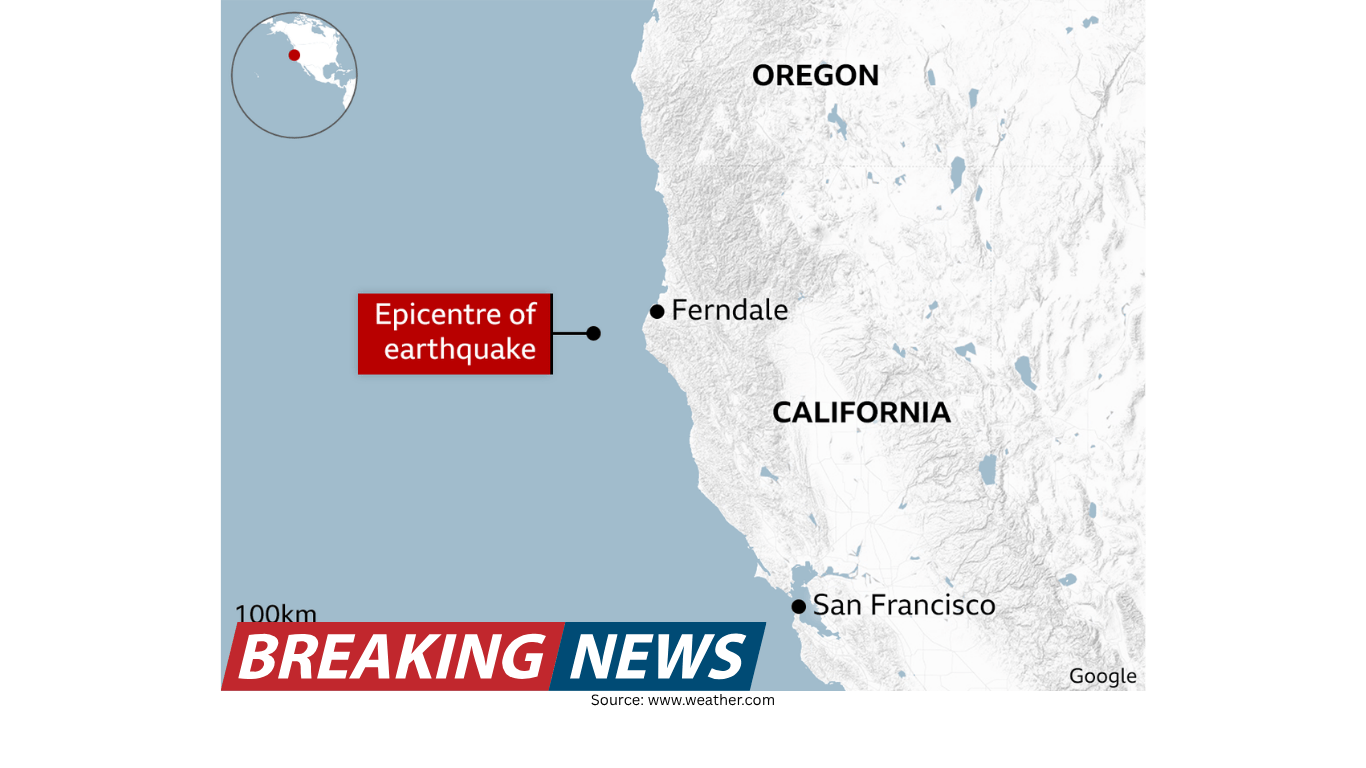
The epicenter was reported just outside of Boulder Creek, California, roughly 60 miles south of San Francisco. From that location, the shaking spread across a large portion of the Bay Area, prompting many residents to wake up and quickly try to understand what had happened.
A shallow quake that was felt widely
One of the notable characteristics of this earthquake was its depth. The tremor was described as shallow—reportedly less than 7 miles below the surface. Shallow earthquakes can be more easily felt at the surface, and this one was widely noticed across the region.
In the minutes and hours after the quake, the experience became a shared overnight moment for many. Residents described being jostled awake, and the shaking was felt broadly enough that it quickly became a topic of conversation across the Bay Area.
Early assessment: low risk of major damage or deaths
The USGS said the risk of major damage or deaths was low. As of the latest updates included in the available information, neither major damage nor deaths had been reported.
That combination—widespread shaking but no immediate reports of significant damage—can be disorienting for residents. Feeling a quake strongly, particularly at night, often prompts people to look for confirmation that others experienced it too, and to seek out official information about the magnitude, location, and likely impacts.
How people learned about it: alerts and social media
The shaking was felt widely, and many residents reached for their phones soon after being awakened. People shared their experiences on social media, comparing what they felt, when they felt it, and where they were at the time.
Earthquake alerts also played a role in how people understood the event in real time. According to reporting referenced in the provided information, people across the Bay Area received earthquake alerts, which go out for earthquakes of magnitude 4.5 and above.
However, the timing of alerts can vary depending on proximity to the epicenter. In Boulder Creek, the alerts—unsurprisingly—came after the shaking began. That detail reflects a reality of earthquake notification systems: for those closest to the source, the shaking may arrive before an alert can be delivered, while people farther away may receive a warning moments before the shaking reaches them.
Aftershocks: what the USGS estimates for the next week
In addition to the initial quake, many people naturally wonder what might come next. The USGS provided estimates about the likelihood of aftershocks in the coming days.
Specifically, the USGS estimates a 56% chance of a magnitude 3 or higher aftershock in the next week. At the same time, it estimates only a 1% chance of a tremor stronger than 4.9 during that same period.
These estimates outline a range of possibilities: smaller aftershocks are relatively plausible over the next week, while a stronger event above 4.9 is considered unlikely based on the USGS estimate provided.
Why this quake drew attention even without major damage reports
Earthquakes can capture attention not only because of their magnitude, but also because of when and where they occur. This quake struck at 1:41 a.m. local time, when many people were sleeping. A sudden jolt at that hour can feel especially intense, even if it does not result in major damage.
It also occurred near Boulder Creek, a location within reach of a large and densely populated region. With the epicenter about 60 miles south of San Francisco, the shaking was positioned to be felt by a substantial number of residents across the wider Bay Area.
In that context, the absence of significant damage reports becomes a key part of the story. For many residents, the immediate questions after a nighttime quake are whether anyone was hurt, whether buildings or infrastructure were affected, and whether additional shaking might follow.
Key facts at a glance
Time: 1:41 a.m. local time (4:41 a.m. EDT)
Magnitude: 4.6 (as reported by the U.S. Geological Survey)
Location: Just outside Boulder Creek, California, about 60 miles south of San Francisco
Depth: Shallow, reportedly less than 7 miles below the surface
Initial impact: No reports of significant damage so far; USGS said risk of major damage or deaths was low
Aftershock outlook: USGS estimates a 56% chance of a magnitude 3+ aftershock in the next week; a 1% chance of a tremor stronger than 4.9 in that timeframe
Alerts: Earthquake alerts go out for magnitude 4.5 and above; in Boulder Creek, alerts came after shaking began
What residents experienced in the moment
The immediate human response to an earthquake—especially one that strikes overnight—often follows a familiar pattern. People wake up abruptly, assess their surroundings, and try to determine whether the shaking is continuing. Many then look for information, either through official channels or by checking in with friends, family, and neighbors.
In this case, the provided information indicates that many people picked up their phones and shared their experiences online. That rapid shift to communication reflects both the shared nature of the event and the need for quick reassurance: if many others felt the same shaking, it confirms what happened and helps people gauge the scope.
Alerts also shaped the experience, particularly for those farther from the epicenter. For residents close to Boulder Creek, the shaking arrived first. For others, an alert may have served as an early signal that an earthquake was underway, even if only by a small margin.
Understanding the alert threshold mentioned
The information provided notes that earthquake alerts go out for earthquakes of magnitude 4.5 and above. With a magnitude of 4.6, this event fell just above that threshold.
That detail helps explain why many people across the Bay Area received notifications. It also underscores why some residents may have been surprised to receive an alert in the middle of the night: the system is designed to notify people when a quake reaches a certain size, even if the shaking is brief.
At the same time, the note that alerts in Boulder Creek came after the shaking began highlights a limitation that is important to understand. People closest to the epicenter have the least time between the start of the earthquake and the arrival of any warning.
What to watch for in the coming days
With the USGS estimating a 56% chance of a magnitude 3 or higher aftershock in the next week, residents may remain attentive for additional smaller tremors. The estimate suggests that aftershocks are a realistic possibility, even if they do not reach the same magnitude as the initial quake.
At the same time, the estimate of only a 1% chance of a tremor stronger than 4.9 in that period indicates that a significantly stronger aftershock is considered unlikely based on the information provided.
For many residents, those numbers can help frame expectations: some additional shaking may occur, but the likelihood of a stronger event above 4.9 is low according to the USGS estimate cited.
A region-wide moment, followed by a cautious calm
Earthquakes are an inescapable part of life in California, but each one still brings a unique mix of surprise and concern—especially when it interrupts sleep and is felt across a wide area. This magnitude 4.6 quake near Boulder Creek was strong enough to wake millions and trigger alerts across the Bay Area, yet early reports indicate no significant damage.
As the region moves through the days ahead, attention may turn to the possibility of aftershocks, guided by the USGS estimates for the coming week. For now, the available information points to a widely felt, shallow earthquake with a low assessed risk of major damage or deaths, and no such outcomes reported so far.