
In Remote Western Alaska, Hot Meals Become a Lifeline After Record Flooding
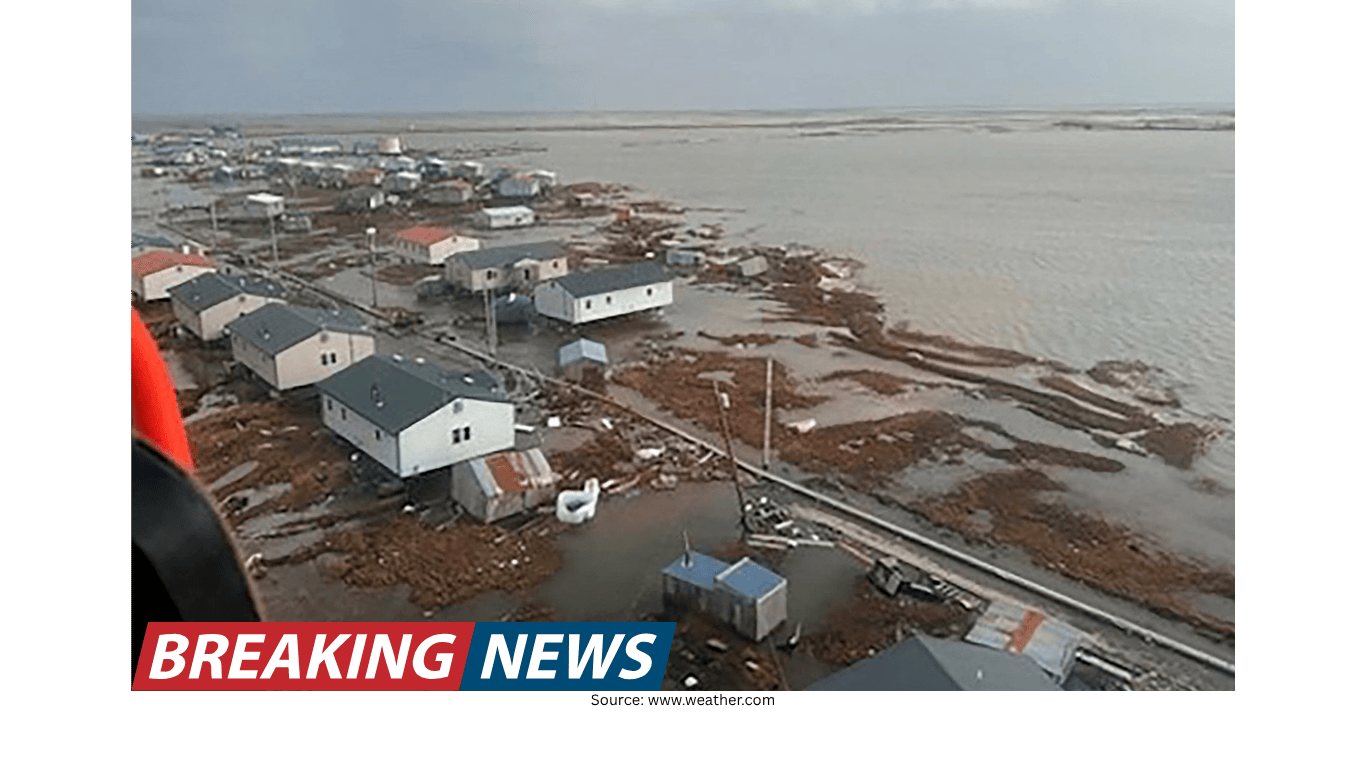
A storm’s aftermath in western Alaska
In early October, villages across western Alaska faced an extreme and destructive weather event. Record flooding combined with winds as high as 100 mph tore through communities and carried away hundreds of homes. For residents, the immediate impacts were visible in what the storm removed—structures, belongings, and the sense of stability that comes from having a place to return to. But the longer-term strain often shows up in what becomes difficult to secure afterward: reliable access to food, warmth, and the routines that help people endure.
These villages are remote and largely Indigenous, and they sit in a region where severe conditions are not new. Residents are accustomed to harsh winters and temperatures that can reach 40 below zero. That experience with cold and isolation can build a kind of preparedness and resilience, yet the devastation from this storm created a different kind of challenge—one that was not simply about facing winter weather, but about recovering from widespread damage and displacement at the same time.
The flooding and wind were linked to the remnants of Typhoon Halong. Even as the storm system weakened from its original form, the impacts that reached western Alaska were strong enough to reshape entire villages. When hundreds of homes are carried away, the result is not only a housing emergency but also a disruption to basic daily life, including cooking, storing food, and gathering safely.
Why food access became a daunting challenge
In many places, disaster response depends on moving supplies quickly by road. Western Alaska’s geography does not allow that. There are no roads connecting these remote communities. That single fact changes what relief can look like. It affects how quickly food can arrive, how consistently it can be delivered, and what kinds of meals can realistically be provided in the days after a storm.
When flooding is severe and homes are lost, residents may not have functional kitchens, refrigeration, or safe indoor spaces to prepare meals. At the same time, people still need nourishment—especially in a region where cold conditions can intensify the physical stress of disaster recovery. Even for communities familiar with extreme temperatures, the combination of displacement and damage can make it harder to keep up with the basics.
In this context, getting food to survivors is not a simple matter of sending ingredients. It requires coordination, local knowledge, and a plan that matches the realities of remote villages. The storm’s devastation meant that the logistical hurdles were not an abstract concern; they were an immediate obstacle to helping people stabilize.
A partnership focused on feeding people—and supporting recovery
In the wake of the storm, World Central Kitchen teamed up with a local non-profit, Bean’s Cafe. The collaboration was aimed at meeting a critical need: feeding survivors in the affected villages. In a disaster, food is one of the first and most urgent forms of support, because it reaches everyone—children, elders, families, and individuals who may be separated from normal supply lines.
The partnership also reflected something broader than calories or convenience. The effort was described not only as a way to feed survivors but as a way to help heal their souls. That phrase points to a reality that often follows major disasters: people need more than physical resources. They need reassurance, dignity, and a sense that they have not been forgotten—especially when they live in places that are difficult to reach and are not connected by roads.
Food, in this setting, becomes both practical aid and a form of care. A prepared meal can reduce the burden on families who are already dealing with loss. It can create a moment of normalcy in a day filled with uncertainty. And it can serve as a gathering point for people who are trying to understand what comes next.
Remote communities, familiar hardships, and a new kind of disruption
Western Alaska’s villages are often described through the lens of their climate: long winters, deep cold, and the kinds of conditions that require planning and endurance. Residents are accustomed to harsh winters and temperatures reaching 40 below zero. That experience matters, because it suggests a community that understands how to prepare for seasonal hardship.
Yet the storm’s impacts were not simply another difficult week of weather. Record flooding and extreme winds changed the landscape of daily life. When hundreds of homes are carried away, the disruption is not limited to a temporary power outage or a brief interruption of services. It affects shelter, safety, and the ability to carry out basic tasks like cooking.
In a remote region with no connecting roads, disruption can linger. The absence of road links is not a minor inconvenience; it is a defining feature of the response environment. It means that outside help must work within the constraints of distance and access, and it makes local partnerships especially important.
What hot meals represent after a disaster
After a storm that brings record flooding and winds up to 100 mph, the idea of a meal can take on new meaning. In ordinary circumstances, food is routine—something planned, purchased, cooked, and shared. After a disaster, it becomes a stabilizing force. It can be one of the first signs that a community is moving from immediate shock toward the slow work of recovery.
The effort to provide meals in these western Alaska villages highlights how disaster response often depends on meeting people where they are—geographically and emotionally. With no roads connecting communities, a meal delivered or served is also evidence of determination: a signal that the obstacles of distance and damage can be navigated through coordination and commitment.
Describing the work as helping to heal survivors’ souls suggests an understanding that trauma is not only physical. People who have lost homes may also lose treasured items, familiar spaces, and the sense of security that comes from knowing what tomorrow will look like. A shared meal does not erase that, but it can offer comfort and connection at a time when both are in short supply.
The role of local knowledge in reaching survivors
The partnership between World Central Kitchen and Bean’s Cafe underscores the value of working with organizations that understand the local context. In remote and largely Indigenous villages, effective support requires more than general experience. It requires awareness of community needs, cultural considerations, and the practical realities of getting supplies and services to people who cannot simply drive to the next town.
Local non-profits can provide insight into how communities function day to day and what forms of assistance will be most helpful. In disaster situations, speed matters, but so does fit. A response that aligns with local needs and constraints can reduce waste and increase the chance that help reaches those who need it most.
In this case, the challenge was not only the scale of damage—hundreds of homes carried away—but also the environment in which the response had to operate. With no connecting roads, every aspect of support becomes more complex. Partnerships can help bridge that complexity by combining broader resources with local understanding.
When weather events collide with isolation
The remnants of Typhoon Halong brought devastating conditions to western Alaska, and the storm’s effects were amplified by the region’s isolation. Isolation is not just about distance; it is about the limits it places on options. In connected areas, residents might evacuate along highways, or relief convoys might arrive by road with food and supplies. In these villages, that pathway does not exist.
This reality can compound the stress of recovery. Even when communities are resilient and accustomed to harsh winters, a sudden event that removes housing and disrupts access to essentials can push systems beyond what they normally manage. The storm’s record flooding and high winds created a scenario where the need was urgent and the delivery of help was inherently difficult.
Food support efforts, therefore, are not simply a matter of charity; they are a response to structural realities. When a community cannot be reached by road, providing meals becomes a more specialized operation, one that must account for limited access and the immediate needs of people who may have lost the ability to cook for themselves.
Food as both immediate aid and emotional support
In the days after a disaster, survivors often face a cascade of decisions and worries: where to sleep, how to stay warm, how to contact loved ones, and how to replace what was lost. Against that backdrop, a reliable meal can reduce at least one major burden. It is practical support that frees up time and energy for other urgent tasks.
But the description of this effort emphasizes something else as well: the emotional dimension of food. Helping to heal survivors’ souls suggests that meals can serve as a form of reassurance. They can offer a sense of being cared for, which can matter deeply when people feel cut off or overwhelmed.
In many communities, food is also tied to togetherness. It can bring people into the same space, even briefly, and create an opportunity to share information, check on neighbors, and feel less alone. After record flooding and destructive winds, those small moments can become part of how a community begins to steady itself.
Key facts from the event
- Record flooding and winds as high as 100 mph affected villages in western Alaska in early October.
- Hundreds of homes were carried away across the impacted villages.
- These remote and largely Indigenous communities are not connected by roads.
- Residents are accustomed to harsh winters and temperatures that can reach 40 below zero.
- The devastation was linked to the remnants of Typhoon Halong.
- World Central Kitchen teamed up with local non-profit Bean’s Cafe to feed survivors and support their recovery.
A recovery measured in essentials
Disaster recovery is often described in terms of rebuilding and repair, but in the first phase it is measured in essentials: safe shelter, warmth, and food. In western Alaska, where villages are remote and not connected by roads, even those basics can be difficult to secure quickly. The storm’s impact—record flooding and winds up to 100 mph—made the need acute by sweeping away hundreds of homes.
The response described here focuses on one essential that can be delivered and shared even amid disruption: prepared food. Through teamwork between World Central Kitchen and Bean’s Cafe, meals became a way to reach survivors in a challenging environment and to offer support that went beyond the physical. Feeding people after a disaster is always urgent. In places where distance and isolation complicate every step, it also becomes a statement of solidarity—proof that help can arrive even when roads do not.
For survivors facing the aftermath of flooding, high winds, and widespread loss, a meal can be more than nourishment. It can be a pause in the chaos, a reminder of community, and a small but meaningful part of the long path back to stability.