
Flooding and Ice Damage Hit Homes Along Black Lake in Northern Michigan
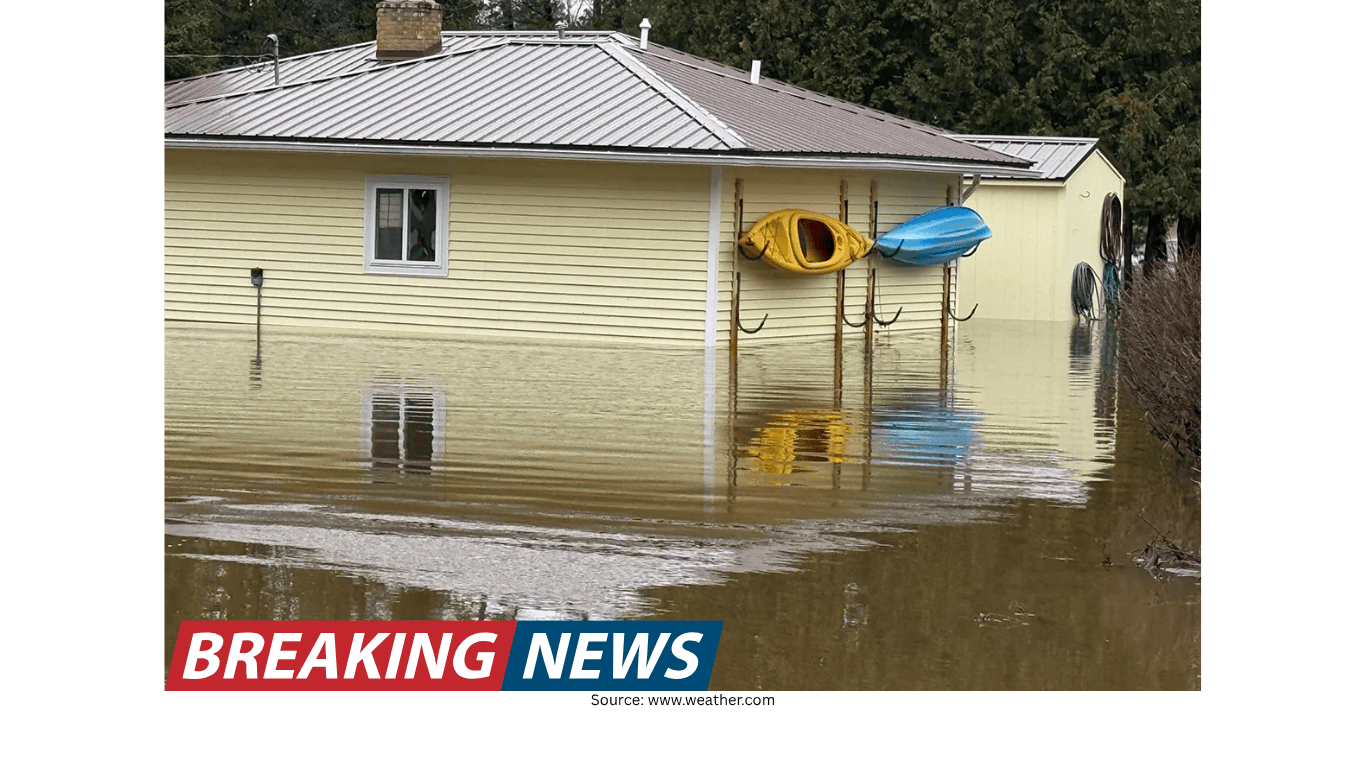
A destructive combination on the shoreline
In northern Michigan, residents and property owners are confronting a scene that many describe as difficult to process: flooding that has swamped homes and vacation cabins in Cheboygan County, paired with ice damage along Black Lake that appears almost surreal. The images circulating from the area are widely described as heartbreaking and nearly unbelievable, not only because of the extent of the water but also because of what happened next—ice sheets pushing into and through parts of buildings.
Flooding is a familiar hazard in many regions, especially during periods of unusual or record weather. But the reports and visuals from Black Lake add a second, less commonly seen element: large slabs of ice that have pierced through homes. The result is not just water damage or shoreline erosion, but structural destruction that can leave a property unrecognizable.
This article summarizes what has been described about the situation in Cheboygan County and along Black Lake, focusing on the impacts to homes and families and the role of record weather in driving the flooding. It also looks at why the experience can be so disorienting for residents—particularly when many learn about the damage through social media before they can see it in person.
Flooding swamps homes and vacation cabins in Cheboygan County
Across Cheboygan County, flooding has swamped homes and vacation cabins. For a region with a mix of year-round residents and seasonal properties, that distinction matters: some families may be present and responding in real time, while others may be away and receiving updates from neighbors, local contacts, or online posts.
When flooding reaches the point of swamping buildings, the consequences extend beyond water on the floor. It can mean saturated walls, compromised foundations, damaged utilities, and the loss of personal belongings. For cabins and vacation homes, it can also mean a sudden disruption of plans and a sense of uncertainty about what remains inside. Even without detailed inventories, the phrase “swamped homes and vacation cabins” signals that water levels rose high enough to affect living spaces, not just yards or shoreline edges.
The flooding described in the county is tied to record weather, which has been identified as a key factor behind the event. While the specific measurements are not detailed here, the emphasis on “record weather” underscores that the conditions were unusual enough to stand out from typical seasonal patterns.
Along Black Lake, ice sheets pierce through homes
While flooding alone can be devastating, the destruction along Black Lake has been characterized as especially hard to comprehend. The reason is the nature of the damage: ice sheets have pierced through homes. In the imagery described, the ice is not simply piled up along the shoreline. Instead, it appears to have intruded into structures, breaking through parts of buildings in a way that looks more like an impact than a slow seep of water.
This kind of damage can feel “surreal” because it contradicts what many people expect from winter ice. Ice is often associated with slippery roads, frozen surfaces, or the quiet stillness of a lake in cold weather. Seeing it act as a destructive force against houses—especially when paired with flooding—creates a visual and emotional shock.
For homeowners, the difference between water damage and ice intrusion can be enormous. Water can ruin floors, furniture, and drywall; ice that pierces through a building can compromise the structure itself. Even without technical details, the description suggests that some properties were not merely flooded but physically breached and broken by moving ice.
Families discover the damage through social media
Another striking element of the situation is how some families are learning about the destruction. According to the description, families are finding out that their homes have been obliterated over social media. That detail captures a modern reality of disasters: information travels faster than people can. Photos and videos can spread rapidly, sometimes reaching owners before any official notice or direct contact is possible.
Learning about catastrophic damage online can intensify the emotional impact. Social media posts can be abrupt, unfiltered, and visual. A person might see a familiar roofline or a recognizable porch in a clip, only to realize the rest of the structure is gone or severely damaged. The word “obliterated” suggests that in some cases, the destruction is total or close to it, leaving little to salvage and few immediate answers.
For families who are away—whether because the property is a seasonal cabin or because travel is difficult during hazardous conditions—social media may be the first confirmation that something has happened. That can create a painful gap between knowing and being able to act. It can also complicate communication, as rumors or partial information can circulate alongside accurate updates.
Why the images feel “heartbreaking and almost unbelievable”
The description of the images as “heartbreaking and almost unbelievable” reflects both the scale of loss and the unusual nature of the event. Flooding that swamps homes is already a severe outcome. Adding ice sheets piercing through buildings creates a second layer of shock, because it suggests forceful movement and sudden structural failure.
There is also a psychological dimension to disasters that affect homes, cabins, and familiar places. A home is not just a building; it is where routines happen and where memories are stored. A vacation cabin can carry decades of family history, traditions, and seasonal rituals. Seeing those spaces overwhelmed by water or punctured by ice can feel like an attack on stability itself.
When destruction occurs in a way that looks “surreal,” it may also be harder for people to accept initially. The mind tends to resist images that do not fit prior experience. That can contribute to the sense of disbelief, even when the evidence is visible.
Record weather and the conditions behind the flooding
The flooding is described as being caused by record weather. Although the specific records are not listed here, the phrasing indicates that the weather conditions were extreme compared with historical norms for the area. In many weather-driven disasters, record conditions can mean unusual precipitation, rapid changes in temperature, or other factors that push lakes, rivers, and drainage systems beyond their typical limits.
What matters most for residents is not only the meteorological label, but the real-world outcome: water levels rising enough to swamp buildings and conditions aligning in a way that allows ice to become destructive. The combination of flooding and ice damage points to a complex event rather than a single isolated hazard.
When record weather is involved, communities can face added challenges. Infrastructure and emergency planning are often designed around expected ranges. When conditions exceed those ranges, impacts can be broader and more severe, and recovery can be more complicated.
What “surreal” shoreline destruction can look like
The phrase “destruction along Black Lake seems surreal” suggests scenes that do not resemble typical flood aftermath. In a standard flood, one might expect standing water, debris lines, and waterlogged interiors. The additional presence of ice sheets piercing through homes implies jagged, irregular damage—ice acting like a battering force.
Even if a viewer is familiar with winter conditions near lakes, the idea of ice entering a home can be hard to imagine. Yet the description indicates that this is precisely what has happened in some cases. That helps explain why the imagery is described as almost unbelievable: it shows a natural element behaving in a way most people rarely witness.
These visuals can also affect how quickly outsiders understand the severity. A flooded street might be recognized as dangerous, but a home punctured by ice can immediately communicate that the event is not just inconvenient—it is destructive at a structural level.
The human toll: displacement, uncertainty, and loss
Although the description focuses on the visuals and the physical damage, the human toll is implicit. When homes and cabins are swamped, people may be displaced, even temporarily. When structures are pierced by ice or described as obliterated, the displacement can be longer-term, and the path forward can be uncertain.
There is also the uncertainty that comes with not knowing the full extent of damage. For those learning about the destruction through social media, the information may arrive in fragments: a short clip, a photo taken from a distance, a comment from someone nearby. That can leave families with urgent questions—what exactly happened to their property, what remains, and what steps are possible next—without immediate clarity.
Loss is not only financial. It can be deeply personal. Homes and vacation cabins often contain irreplaceable items: photographs, keepsakes, and objects tied to family history. Flooding and ice damage can destroy those items quickly, sometimes before owners have any chance to protect them.
How communities process sudden, visible destruction
In events like this, communities often process the damage collectively, especially when images and videos circulate widely. The description indicates that the visuals are compelling and emotionally heavy. That can lead to a shared sense of shock, as neighbors compare what they are seeing and try to understand how such damage occurred.
At the same time, the spread of images can be a double-edged sword. It can help communicate the seriousness of the situation and alert others to risks. But for families directly affected, seeing their own property in a public feed can be painful, particularly if they have not yet been able to visit the site or speak with anyone in person.
The fact that some families are learning of obliterated homes via social media highlights how disasters now unfold in public view. It changes the timeline of awareness and can shape the emotional experience of loss.
Key points from what has been described
- Flooding across Cheboygan County, Michigan has swamped homes and vacation cabins.
- Along Black Lake, the destruction has been described as surreal, with ice sheets piercing through homes.
- Some families have learned that their homes were obliterated through social media.
- The flooding is linked to record weather conditions described as driving the event.
Looking ahead: understanding the event through the evidence available
Based on what has been described, the situation in Cheboygan County and along Black Lake is defined by a rare and damaging overlap: flooding severe enough to swamp buildings and ice movement powerful enough to pierce through homes. The emotional weight of the images—heartbreaking, almost unbelievable—comes not only from the scale of damage but from its character, which appears outside what many residents expect to see along a lakeshore.
As families assess what happened, the role of record weather will remain central to understanding why the flooding occurred and how conditions aligned to produce such dramatic ice damage. For those affected, however, the immediate reality is more personal than meteorological: the loss of homes and cabins, the shock of discovering destruction through social media, and the difficult work of figuring out what comes next.
In the meantime, the images from Black Lake and the broader flooding in Cheboygan County stand as a stark reminder that extreme conditions can transform familiar landscapes quickly—and that the impacts can reach deep into the places people consider safest and most enduring.