
Super Typhoon Sinlaku Rapidly Intensifies in the Pacific, Outer Bands Reach the Mariana Islands
A powerful Pacific storm draws attention
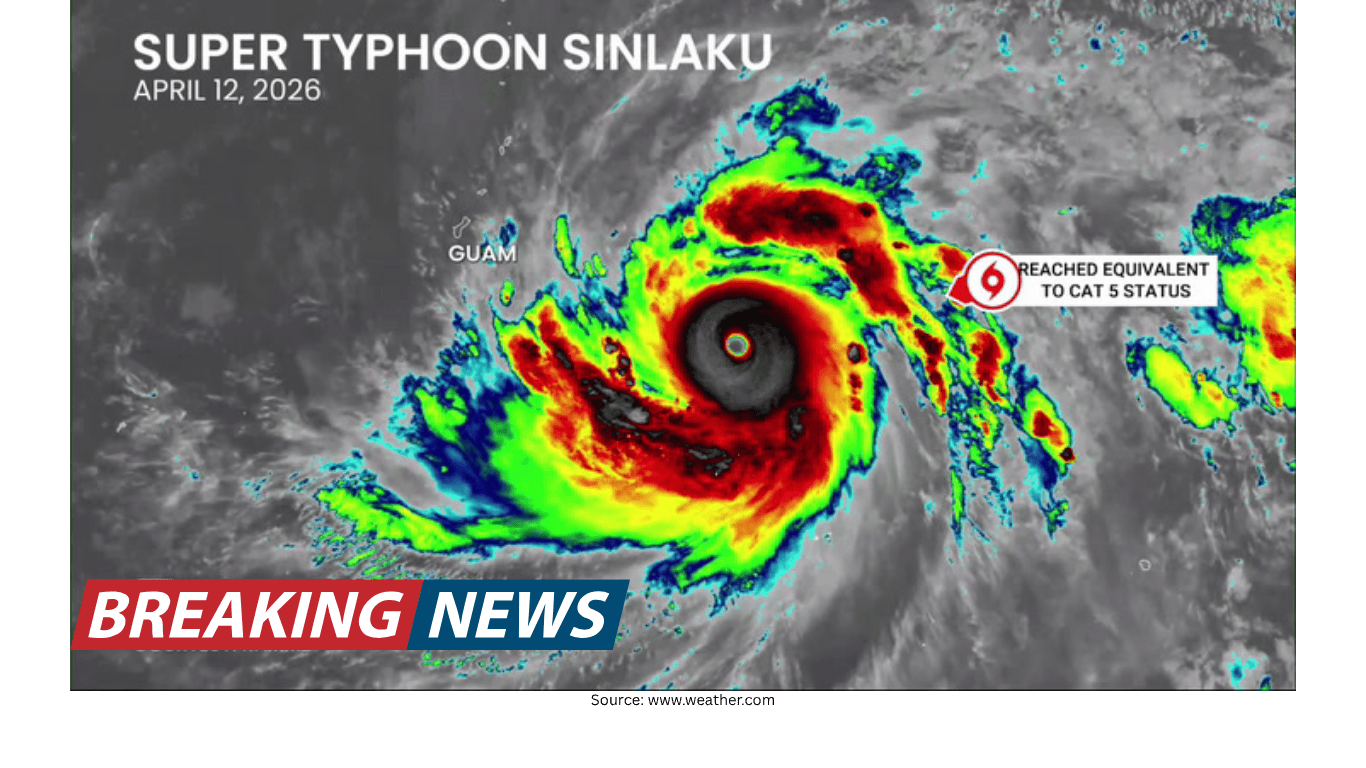
Super Typhoon Sinlaku has rapidly intensified over the Pacific, producing striking satellite views that show a massive, well-defined eye. The storm’s presentation in imagery—symmetry, a clear center, and expansive structure—has helped underscore just how quickly it has strengthened.
According to the details provided, sustained winds have reached 180 mph. That wind speed places Sinlaku among the most intense tropical cyclones, and the combination of a pronounced eye and extreme winds has made it a major focus for weather watchers.
While the storm remains over the Pacific, its scale and strength mean it cannot be treated as a distant event. Large cyclones often influence wide areas through their outer circulation, and Sinlaku is already demonstrating that reach as its outer bands begin to affect island communities.
Rapid intensification and what the imagery shows
The defining feature highlighted so far is the storm’s rapid intensification. In practical terms, that phrase signals a notable and fast increase in strength over a short period. In Sinlaku’s case, the reported outcome is a system with a “stunning” satellite appearance and a clearly visible, well-defined eye.
Satellite imagery is often the most immediate way for the public to grasp a cyclone’s organization and intensity. A large, cleanly defined eye can be a visual indicator of a highly organized storm. In Sinlaku’s case, the imagery has revealed a massive storm with a center that is easy to identify—an important detail because it helps convey that the cyclone is not disorganized or weak.
Beyond the eye, the storm’s overall footprint matters. A large system can spread impacts far from the core, particularly through rainbands that can extend outward and sweep across islands and open water well ahead of the center.
Outer bands begin to lash the Mariana Islands
Even as the most intense conditions remain associated with the inner core, Sinlaku’s outer bands have begun to lash the Mariana Islands. That detail is significant because outer bands can bring periods of squally weather, including bursts of heavy rain and gusty winds, sometimes arriving in waves as the storm’s circulation rotates.
For residents and travelers in the region, the onset of outer-band impacts can be the first tangible sign that a distant storm is becoming a local concern. These bands can also affect marine conditions and visibility, and they may disrupt routine activities even if the storm’s center stays well offshore.
The mention of the Mariana Islands also places the storm’s influence within a real-world geographic context: island communities that can experience changing weather quickly as tropical systems approach or pass nearby.
Track outlook: a storm being watched closely
Sinlaku is described as being “on track” to potentially become the strongest system of 2026 so far. This characterization reflects both its current intensity and the expectation that it may remain exceptionally powerful relative to other storms observed this year.
It is important to interpret “on track” as a forward-looking assessment rather than a guarantee. Tropical cyclones can fluctuate in strength, and their future evolution depends on multiple factors. Still, the information provided emphasizes that Sinlaku’s current state—rapid intensification, a massive and well-defined eye, and sustained winds reported at 180 mph—has placed it in rare territory.
For the public, this kind of framing often serves as a signal to pay attention to updates. When a storm is discussed as a possible benchmark for the year, it tends to draw heightened interest from meteorologists, emergency planners, and anyone in the broader region who could experience indirect or direct impacts.
Why a well-defined eye matters
One of the most notable descriptors in the available information is the “massive, well-defined eye.” In tropical cyclones, the eye is the relatively calm center surrounded by the eyewall, where the most intense winds and convection typically occur. A well-defined eye in satellite imagery often corresponds with a storm that has become highly organized.
In Sinlaku’s case, the eye is not just present—it is described as large and clearly defined. That kind of structure can indicate a mature cyclone with a strong, stable inner core at the time the imagery was captured.
For observers, the eye can be a shorthand visual cue for intensity. While it does not tell the full story on its own, a sharply defined eye paired with extremely high sustained winds communicates that the storm has reached a formidable level of strength.
Understanding what “180 mph sustained winds” implies
The reported sustained winds of 180 mph are a central detail in the description of Sinlaku. Sustained winds refer to winds averaged over a specific time period, which helps standardize how intensity is communicated. Regardless of the averaging method used in different basins, the key takeaway is that the storm is described as extraordinarily intense.
At that level, the storm’s core would be expected to be extremely dangerous if it were to move over land. Even without discussing specific damage outcomes, the number itself conveys severity and explains why the storm is being closely monitored.
For people following the storm from afar, the wind speed figure also helps contextualize why the satellite imagery is described as “stunning.” Highly intense cyclones often exhibit dramatic, well-organized cloud patterns and a pronounced eye, matching the description provided.
What outer rainbands can mean for islands
The note that Sinlaku’s outer bands are beginning to lash the Mariana Islands is a reminder that impacts can start before the center arrives—if it arrives at all. Outer bands can produce fast-changing conditions, with rain and wind arriving in pulses.
Even when the most extreme winds remain near the eyewall, outer bands can still be disruptive. They can bring intermittent downpours and gusty squalls that complicate travel, outdoor plans, and marine operations. For island chains, these bands can sweep through quickly and then return again as the circulation rotates.
Because the information provided focuses on the beginning of these impacts, it suggests an early phase of regional effects rather than a completed event. That timing matters for situational awareness: it indicates the storm’s influence is expanding outward and reaching populated areas.
How a storm becomes a standout of the year
The description indicates Sinlaku could become the strongest system of 2026 so far. That statement places the storm within a year-to-date context. It does not claim it will be the strongest of the entire year, but it does suggest it has the potential to rank at the top of the year’s storms at this point in time.
Such comparisons are typically driven by intensity metrics and observed structure. Here, the key metrics and descriptors are already provided: rapid intensification, sustained winds reaching 180 mph, and a massive, well-defined eye visible in satellite imagery.
When storms reach this level, they often become reference points for how quickly conditions can change over open water and how rapidly a cyclone can organize into a powerful system.
Key points at a glance
Super Typhoon Sinlaku has rapidly intensified over the Pacific.
Satellite imagery shows a massive, well-defined eye.
Sustained winds are reported to have reached 180 mph.
Outer bands have begun to lash the Mariana Islands.
The storm is being tracked as a potential strongest system of 2026 so far.
Staying focused on verified details
At this stage, the most reliable information available centers on Sinlaku’s observed intensity and its expanding reach. The storm’s rapid strengthening and the clear depiction of its eye in satellite imagery provide a consistent picture: this is a powerful, well-organized tropical cyclone over the Pacific.
The mention of the Mariana Islands experiencing the first effects from outer bands adds an important human and geographic dimension. It indicates that, while the storm’s core remains elsewhere, the system’s broader circulation is already influencing weather in the region.
With the storm described as potentially the strongest system of 2026 so far, Sinlaku stands out not only for its present strength but also for what it represents in the context of this year’s tropical activity to date.
What to watch as the situation evolves
Based strictly on the information provided, the immediate themes are intensity, structure, and early regional impacts. The storm’s sustained winds and well-defined eye suggest a powerful core, while the outer bands reaching the Mariana Islands show that effects can occur far from the center.
As Sinlaku continues on its current trajectory, attention will likely remain on whether it maintains or changes in intensity and how its outer circulation continues to affect nearby islands. The storm’s status as a possible top system of 2026 so far makes those developments especially notable.
For now, the available facts point to a rapidly intensified super typhoon with exceptional winds, a striking satellite signature, and an expanding footprint that is already being felt at the edges in the Mariana Islands.