
Thousands Gather in England to Mark the Winter Solstice
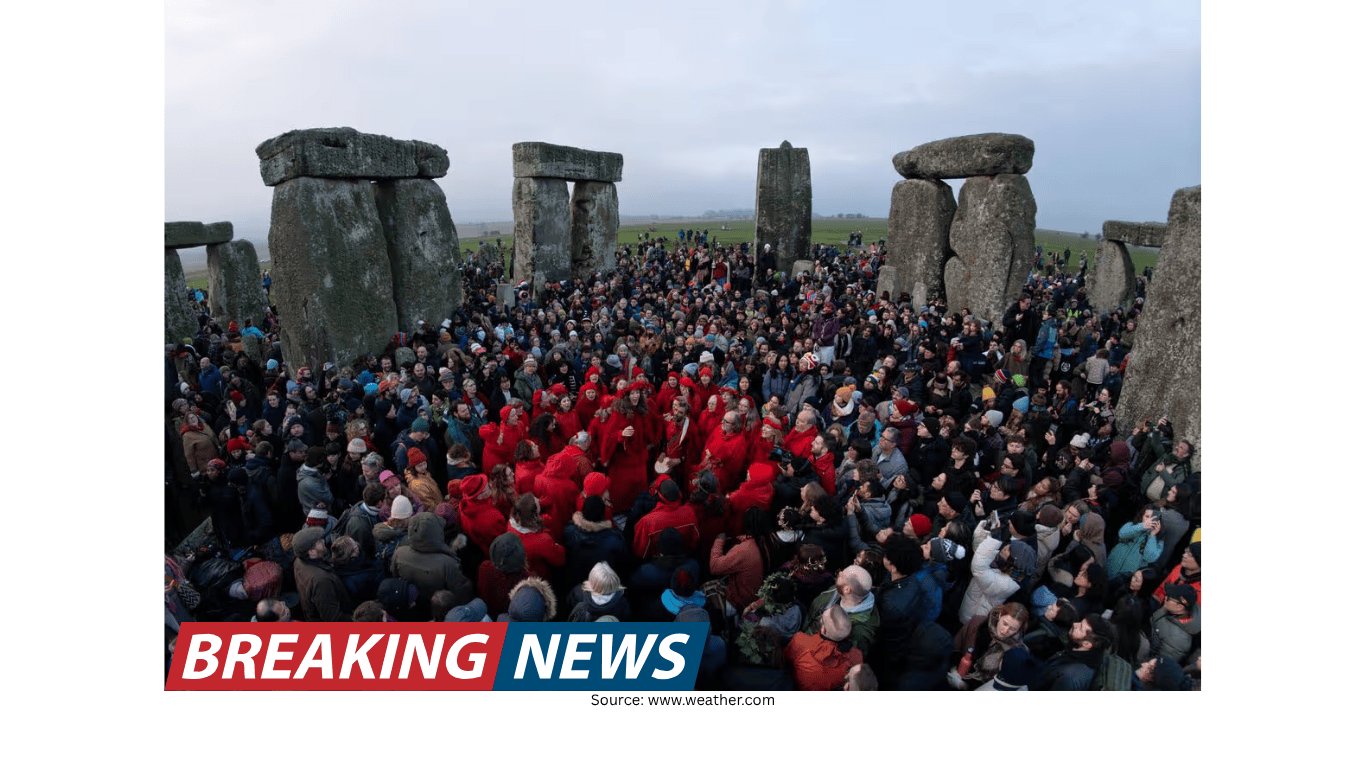
A midwinter milestone draws large crowds
Across England, the winter solstice continues to act as a powerful marker in the calendar—one that is both astronomical and cultural. This year, as the solstice marked the beginning of astronomical winter, thousands of people gathered at two well-known locations: Stonehenge and Glastonbury Tor. The scale of the turnout underscored how the day remains meaningful for many, whether they arrive out of curiosity, tradition, spirituality, or a simple desire to witness a seasonal turning point alongside others.
The winter solstice is often understood as a boundary: a moment that signifies the shift into astronomical winter. That framing alone can make the day feel distinct, even for those who do not follow seasonal observances closely. For others, the solstice carries deeper symbolic weight. Some pagan traditions have believed that the sun was “reborn” on the winter solstice, a concept that adds a layer of renewal to a date that arrives during the darkest part of the year.
Stonehenge: a focal point for solstice observance
Stonehenge, one of England’s most recognized ancient sites, has long been associated in the public imagination with solstice gatherings. On the winter solstice, the site again became a focal point for people looking to mark the day in person. Thousands assembled there, reflecting the enduring draw of a shared experience in a place that many consider uniquely suited to seasonal observation and reflection.
While visitors arrive with different motivations, large gatherings at Stonehenge on the solstice often share a common theme: people want to be present at a moment that feels larger than everyday routine. The winter solstice provides that moment through its clear astronomical definition and its long-standing role as a seasonal milestone. In that sense, the crowd itself becomes part of the event—an expression of collective attention directed at the same point in time.
For some attendees, being at Stonehenge on the winter solstice is a form of participation in tradition. For others, it is a chance to observe the day in a setting that feels connected to history. And for many, it is simply an opportunity to stand among others and recognize the shift into astronomical winter, a season that can be both physically and emotionally distinct.
Glastonbury Tor: another gathering place for the day
In addition to Stonehenge, thousands also gathered at Glastonbury Tor. The Tor, known for its prominent presence in the landscape, served as another destination for people seeking to mark the winter solstice. The fact that large numbers assembled at both locations speaks to the broader appeal of the day and the variety of settings in which it can be observed.
Glastonbury Tor has long been associated with spiritual and cultural interest. On the solstice, it offered a place where people could come together to recognize the beginning of astronomical winter. As with Stonehenge, the gathering itself becomes a statement: the winter solstice is not only a date on a calendar but a lived experience for those who choose to observe it publicly.
When thousands gather in a single place, the day takes on a heightened sense of occasion. The winter solstice can be a quiet and personal moment, but it can also be communal. At Glastonbury Tor, as at Stonehenge, the act of showing up is part of the meaning—an acknowledgment that seasonal change is worth noticing.
The winter solstice and the start of astronomical winter
The winter solstice is notable in part because it is tied to astronomy. In this case, it marked the beginning of astronomical winter. That distinction matters because it anchors the day in a clear definition: it is not merely a cultural holiday or a loosely defined seasonal feeling, but a specific point that signals a shift into a new phase of the year.
For many people, the phrase “astronomical winter” can sound technical. Yet the idea behind it is straightforward: the solstice represents the start of winter as measured by the position of the Earth and sun. Even without diving into scientific detail, the solstice offers a moment when people can pause and recognize that the season has officially turned.
This connection between the sky and the calendar is one reason the winter solstice remains compelling. It blends the measurable with the meaningful. The day is both a marker of time and a prompt for reflection, which helps explain why it continues to draw crowds to places that feel symbolically aligned with the event.
Traditions of renewal: the belief in the sun’s rebirth
Beyond its astronomical significance, the winter solstice carries cultural and spiritual interpretations. Some pagan traditions believed that the sun was reborn on the winter solstice. This belief frames the day not only as the start of winter but also as a turning point that hints at return and renewal.
The language of “rebirth” is powerful, particularly at a time of year often associated with darkness and cold. In that context, the winter solstice can be seen as a moment when the cycle begins to shift. Whether or not an individual shares the belief literally, the symbolism can resonate: the solstice becomes a reminder that change is underway, even if it is not immediately visible.
For those who come to observe the solstice at sites like Stonehenge and Glastonbury Tor, such traditions may shape the mood of the gathering. The day can feel ceremonial, even without a single unified ritual. People may arrive with personal interpretations, but the shared awareness of the solstice—and its long-standing association with renewal—creates a sense of common ground.
Why people travel to observe the solstice
When thousands decide to gather in specific places on the winter solstice, it raises a simple question: what draws them there? The answer is rarely one thing. The solstice sits at the intersection of astronomy, tradition, and personal meaning. It is a date that can be approached as an event to witness, a season to acknowledge, or a story to participate in.
Stonehenge and Glastonbury Tor are not just scenic destinations; they are places that many people associate with the idea of seasonal observance. On the solstice, that association becomes more immediate. The day offers a reason to be present, and the presence of others reinforces the feeling that something notable is happening.
For some, the journey is about connection—to history, to landscape, to community, or to a spiritual idea of the year’s cycle. For others, it is about marking time in a way that feels tangible. The winter solstice is an abstract concept until it is experienced, and gathering at a well-known site can make it feel real.
A communal experience shaped by place
Large gatherings are shaped not only by the date but by the location. Stonehenge and Glastonbury Tor each carry their own atmosphere, and that atmosphere influences how people experience the winter solstice. At both sites, the landscape and the sense of history can amplify the feeling that the solstice is more than an ordinary day.
In communal settings, individuals often find meaning through shared attention. Even without speaking to strangers, participants can feel part of a collective act: showing up to recognize the beginning of astronomical winter. The winter solstice can be observed anywhere, but certain places concentrate the experience, giving it a focal point.
That concentration can also create a sense of continuity. When people gather year after year at the same sites, the solstice becomes part of an ongoing pattern. The day is fixed, but the crowd is always new, made up of first-time visitors and returning observers. Together, they keep the tradition visible.
What the winter solstice represents for modern observers
In modern life, many seasonal transitions can pass with little notice. The winter solstice, however, continues to stand out. Its definition as the beginning of astronomical winter gives it clarity, and its connection to long-standing traditions gives it depth. That combination makes it easy to understand why the day still draws interest.
For some, the solstice is a chance to step outside routine and acknowledge the natural calendar. For others, it is a moment of reflection, a way to pause and consider the year’s cycle. And for those influenced by pagan traditions that speak of the sun’s rebirth, it can be a hopeful marker—an idea that the season’s darkness is part of a larger rhythm rather than an endpoint.
The gatherings at Stonehenge and Glastonbury Tor illustrate how these meanings can coexist. A crowd does not require a single shared belief to be unified by a moment. It only requires a shared recognition that the day matters, whether for astronomical reasons, cultural reasons, or personal ones.
Key takeaways from the solstice gatherings
The winter solstice marked the beginning of astronomical winter.
Thousands gathered at Stonehenge in England to observe and celebrate the day.
Thousands also gathered at Glastonbury Tor in England for the same occasion.
Some pagan traditions have believed that the sun was reborn on the winter solstice, adding a theme of renewal to the date.
A seasonal turning point, observed together
The winter solstice endures because it offers a clear moment of transition: the beginning of astronomical winter. Yet the day’s staying power is also rooted in meaning that goes beyond astronomy. Beliefs about the sun’s rebirth, along with the appeal of gathering in places that feel connected to the season, help turn the solstice into an experience rather than just a date.
At Stonehenge and Glastonbury Tor, thousands chose to mark that experience together. In doing so, they highlighted a simple truth about seasonal milestones: people continue to seek ways to make time visible, to connect with tradition, and to share a turning point with others—even in the middle of winter.