
Light Pollution Puts Chile’s Atacama Night Skies—and Global Astronomy—Under Pressure
A sky that reveals itself, star by star
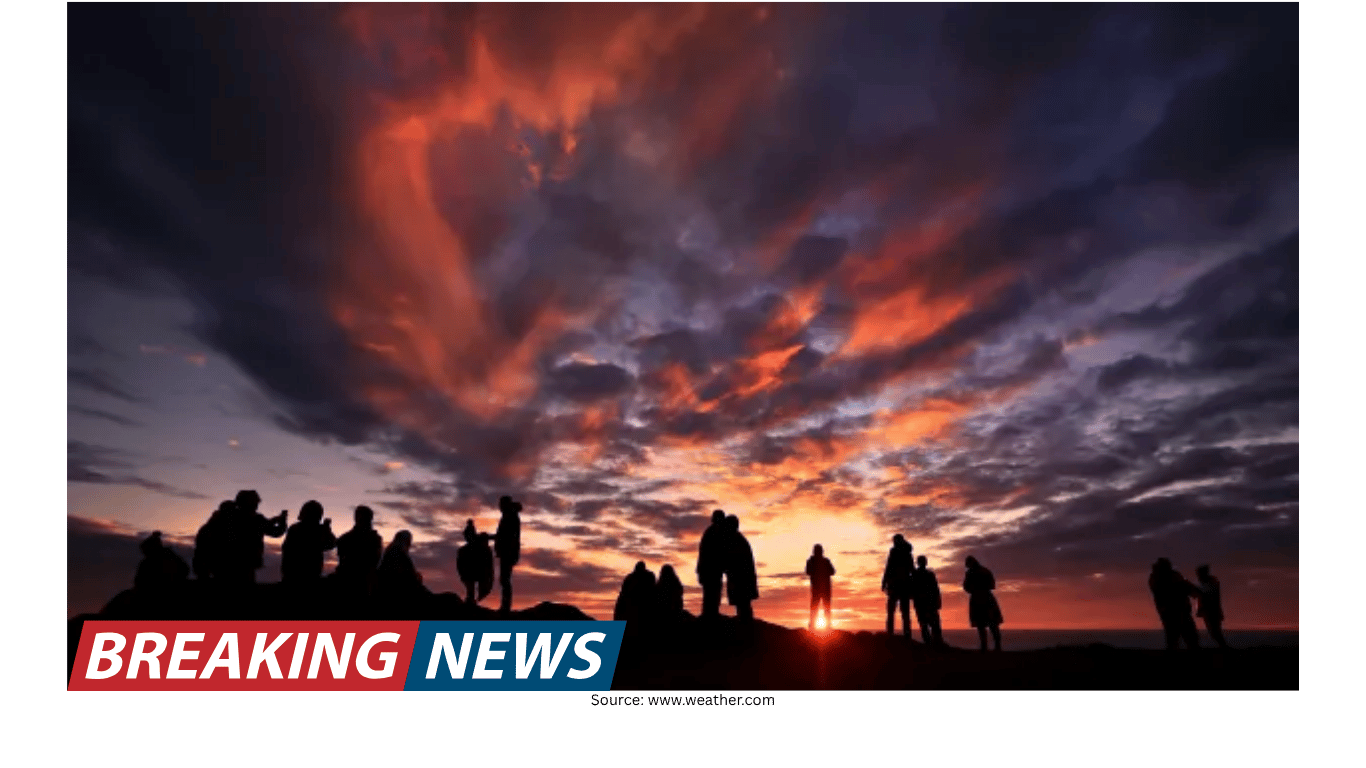
In Chile’s Atacama Desert, the night does not simply arrive—it unfolds. At first, the darkness can feel absolute. Then, as eyes adjust, points of light begin to appear: a faint spark, then another, brighter one. Soon the sky fills with stars, planets and familiar constellations. Before long, a full galaxy stretches overhead, visible without any telescope at all.
This experience is not just a poetic description of a remote landscape. It reflects why the Atacama has become one of the world’s most important places for astronomy. The desert is widely known for its extreme dryness—often described as the driest place on Earth—but its darkness is equally valuable. In an era when artificial lighting is spreading across much of the planet, the Atacama still offers a rare window into the universe.
Why the Atacama is uniquely suited to astronomy
Scientists and observatory staff point to a combination of factors that make northern Chile exceptionally favorable for observing space. The Atacama’s dry climate reduces the moisture that can blur or block views of the sky. Its high altitude also matters, placing observatories above a larger portion of the atmosphere that can distort incoming light from distant objects.
But one factor is repeatedly emphasized as crucial: isolation from urban light pollution. Artificial light from cities can brighten the sky, reducing contrast and making faint celestial objects harder—or impossible—to detect. In the Atacama, distance from major population centers has long helped preserve the kind of darkness that cutting-edge astronomy depends on.
Chiara Mazzucchelli, president of the Chilean Astronomical Society, described the desert’s conditions as unmatched. She noted that there are more than 300 clear nights per year—nights with no clouds and no rain. For astronomers, that reliability is not a convenience; it is the foundation for long-term research programs that require consistent, high-quality observations.
“Photon Valley” and the concentration of world-class observatories
The Atacama is not home to a single telescope or a single research site. It has become an international corridor of astronomy infrastructure, where multiple observatories operate side by side with some of the most sophisticated instruments ever engineered.
During a multi-day visit to the Paranal facilities—located in the heart of what has been called “Photon Valley”—the scale of this scientific presence becomes clear. Paranal is one of nearly 30 astronomical sites in northern Chile. Many are managed by international organizations, and they draw thousands of astronomers and scientists each year who come to investigate the origins of the universe.
Itziar de Gregorio-Monsalvo, a representative in Chile for the European Southern Observatory (ESO), said that many large facilities are located in the country and highlighted the power of ESO’s telescopes. For visiting researchers, access can be highly competitive. Julia Bodensteiner, an assistant professor at the University of Amsterdam, noted that the odds of being selected as a visiting astronomer at Paranal are about 20% to 30%.
The physical reality of working at high altitude
The Atacama’s advantages for astronomy come with daily challenges for the people who work there. The terrain is rocky and uneven, and many sites sit at altitudes exceeding 3,000 meters (10,000 feet). At those elevations, oxygen can feel scarce. The desert’s temperature swings are also intense: scorching days can give way to relentlessly cold nights.
Yet these demanding conditions are part of what makes the region so valuable. Across more than 105,000 square kilometers (40,500 square miles) of desert, the atmosphere and climate create an environment that supports precise observations—exactly the kind needed for modern astronomy and future exploration.
A next-generation telescope with global significance
Among the most ambitious projects underway is the Extremely Large Telescope (ELT), an ESO endeavor scheduled for completion in 2030. The project’s scale is reflected in its price tag—$1.5 billion—and in its design: 798 mirrors and a light-gathering area of nearly 1,000 square meters (about a quarter of an acre).
According to the details provided by ESO, the ELT is expected to be 20 times more powerful than today’s leading telescopes and 15 times sharper than NASA’s Hubble Space Telescope. For astronomers, such improvements are not incremental. Greater light-gathering power and sharper resolution can open entirely new categories of research, allowing scientists to detect objects and details that current instruments cannot.
ESO astronomer Lucas Bordone said the ELT should enable researchers to see Earth-like planets in what astronomers call the habitable zone—planets that are candidates in the search for life. These kinds of observations depend heavily on dark, stable skies. As astronomers emphasize, the surrounding environment can determine whether a telescope’s theoretical capabilities translate into real scientific results.
Life underground: how observatories protect the darkness
At Paranal, the sensitivity of the instruments shapes nearly every aspect of daily life. Specialists live in an underground residence designed to keep their presence almost undetectable from the perspective of the telescopes. Windows must remain covered. Hallways stay dark. Movement outdoors is guided only by flashlight.
These practices may sound extreme, but they underscore a basic reality of astronomical observation: even faint, localized light can interfere with data. When the goal is to detect distant and often faint signals from space, the margin for error is narrow. The environment around an observatory becomes part of the scientific instrument itself.
Development pressures and an increasingly contested landscape
Researchers and local experts say the Atacama’s darkness can no longer be taken for granted. Eduardo Unda-Sanzana, director of the Astronomy Center at the University of Antofagasta, recalled that two decades ago the desert felt like “an ocean of darkness,” where it was “just you and the universe.”
Since then, the landscape has changed. Urban sprawl, industrial development, and the arrival of mining and wind farms have made the desert a coveted territory. The region’s economic activity and infrastructure needs increasingly intersect with the requirements of astronomy, and that balance is not always easy to reach.
These shifts are not purely aesthetic. For observatories, changes in lighting, dust levels, and even subtle vibrations can affect the quality of observations. As development expands, astronomers say the risk is that the Atacama could gradually lose the very characteristics that made it a global hub for space science.
A proposed energy project becomes a flashpoint
Those tensions became especially visible last year when a proposed green power complex was slated for construction just kilometers from the Paranal Observatory. The site is managed by ESO and is also the future home of the ELT. The proximity of the project—planned about 10 kilometers (6 miles) from Paranal—sent shock waves through the international scientific community.
Experts raised concerns about multiple impacts that could affect astronomical work, including increased light pollution, micro-vibrations and dust, as well as greater atmospheric turbulence. In combination, they warned, these conditions could make astronomical activities unviable in an area designed for some of the most sensitive observations on Earth.
De Gregorio-Monsalvo framed the stakes in blunt terms, arguing that placing a telescope like the ELT next to a city would undermine its power. In that scenario, the telescope’s size and sophistication would not compensate for the loss of darkness and stability.
In late January, the company behind the project canceled it following a massive appeal from astronomers, physicists and Nobel laureates. The cancellation was significant, but scientists say the episode revealed deeper problems that remain unresolved.
What the dispute exposed: laws seen as lax, outdated and unclear
Even though the proposed complex was canceled, the conflict exposed a broader concern: researchers argue that existing sky preservation laws are not strong enough to prevent similar proposals from emerging in the future. The debate has focused on whether regulations are sufficiently strict, up to date, and clearly defined—especially in areas that have been recognized as critical for astronomy.
In response to the controversy, several environmental regulations have come under review, including one from Chile’s science ministry that targets protected astronomical zones. Daniela González, director of the Cielos de Chile Foundation—a nonprofit founded in 2019 to protect the quality of Chile’s night skies—said work is underway to ensure that new criteria are strict enough to guarantee there will be no impact on astronomical areas.
Unda-Sanzana, who is also part of a ministerial advisory commission that delivered recommendations to Chile’s government after the incident, expressed frustration that the situation remains uncertain. He said that despite the attention the issue received, the underlying vulnerabilities persist and similar projects could be proposed again without updated regulations.
History as a warning sign
For some Chilean scientists, the debate is not only about preventing future harm—it is also about learning from the past. Unda-Sanzana pointed to a precedent from the early 20th century: the first international heliophysics observatory in Chile, a major solar station operated by the U.S. Smithsonian Institution, was forced to shut down operations in 1955 due to environmental pollution linked to the expansion of mining activity in the area.
That closure remains a cautionary example of how scientific infrastructure can be undermined when environmental conditions change around it. In Unda-Sanzana’s view, decades of experience should make it possible to avoid repeating similar mistakes.
What is at stake for science—and for the desert’s identity
The Atacama’s astronomical sites are more than isolated research outposts. They are part of a global scientific network, producing data that researchers describe as fundamental not only for understanding the universe, but also for life on Earth and the possibilities of life beyond it. The desert’s role as a platform for discovery depends on maintaining the conditions that allow instruments to perform at their limits.
The recent dispute near Paranal showed that even projects framed around clean energy can raise difficult questions when placed near sensitive scientific zones. The issue is not a simple choice between development and research, but rather how decisions are made, what standards apply, and whether protections are strong enough to preserve areas that are uniquely valuable.
For now, the Atacama remains one of the clearest windows to the cosmos. But researchers and advocates argue that protecting darkness requires active policy, careful planning, and rules that reflect both the region’s rapid changes and the extreme sensitivity of the instruments operating there.
Key points from the Atacama debate
The Atacama Desert combines dry climate, high altitude and isolation from urban light, supporting more than 300 clear nights per year.
Northern Chile hosts nearly 30 astronomical sites, many managed by international organizations, drawing thousands of scientists annually.
The Extremely Large Telescope (ELT), scheduled for completion in 2030, is designed with 798 mirrors and nearly 1,000 square meters of light-gathering area.
A proposed green power complex planned about 10 kilometers from Paranal was canceled after widespread scientific opposition.
Scientists say the episode highlighted concerns that sky preservation laws are lax, outdated and unclear, prompting regulatory reviews.
Past experience—including the 1955 shutdown of a solar station due to pollution tied to mining expansion—is cited as a warning.
As Chile reviews its regulations and stakeholders debate how to define and protect astronomical zones, the core question remains the same: how to ensure that the world’s darkest skies stay dark enough for the discoveries they are uniquely positioned to deliver.