
Twin Tornadoes Near Braman, Oklahoma: What the Video Shows and What Officials Reported
A rare scene near the Kansas border
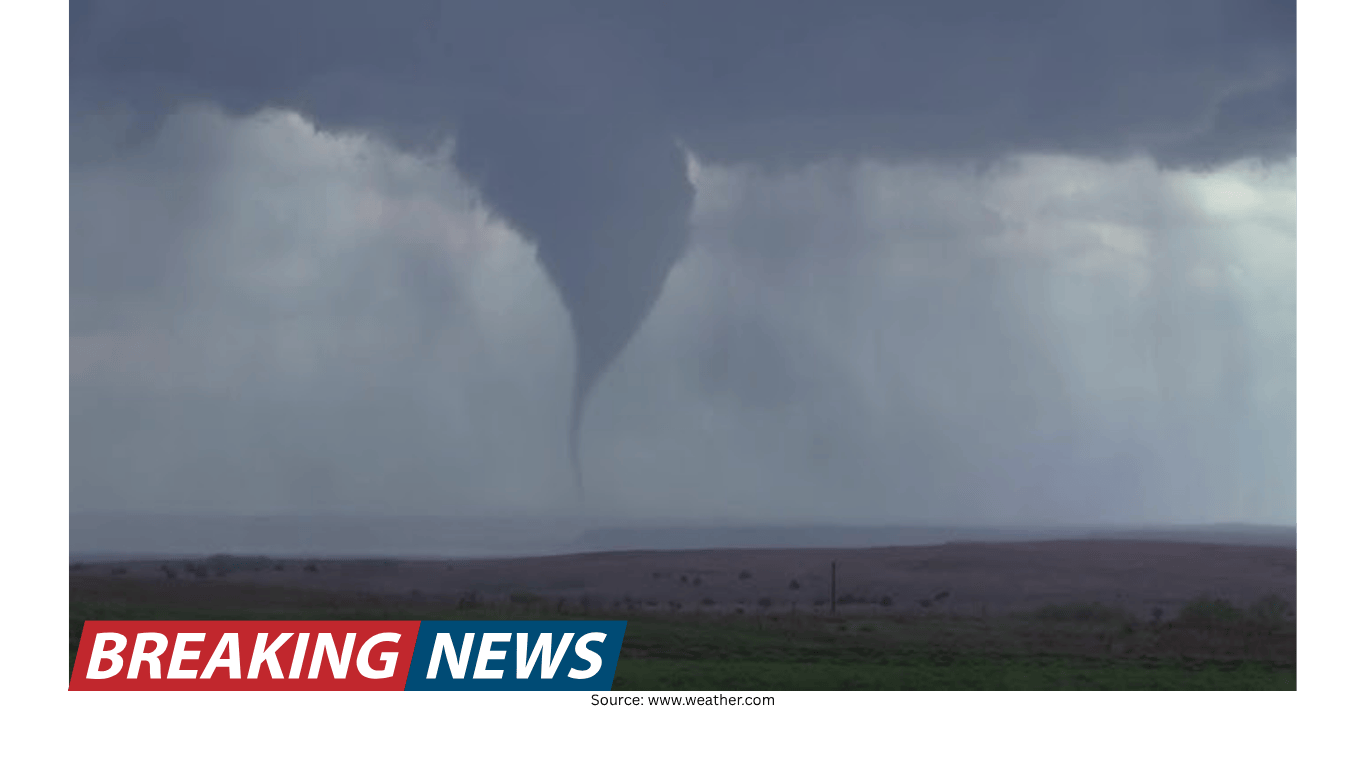
Near Braman, Oklahoma, storm chasers captured video that stood out even in a season when severe weather can produce dramatic images. The footage showed twin tornadoes spinning close to each other near the town, creating the impression of two separate funnels moving in tandem. In the video, the tornadoes appear to rotate around one another, an unusual visual that made the moment look almost choreographed.
The scene unfolded near the Kansas border, with the tornadoes visible at the same time in the same general area. For people watching from a distance, the effect was striking: two rotating columns that seemed to be “locked in a dance,” as the description of the video put it, circling and shifting in relation to each other.
Warnings and the message to take cover
While the video drew attention for its surreal look, the immediate priority for those in the path of the storm was safety. Residents of Braman were warned to take cover as the tornadoes were reported near the town. The warning underscored the reality behind the imagery: regardless of how unusual the formation may appear, the presence of tornadoes in the area is a life-safety situation.
When tornadoes are nearby, the instruction to take cover is not a formality. It reflects the possibility of rapidly changing conditions, including shifts in track and intensity. In this case, the warning to residents came as the twin tornadoes were being observed and recorded in the vicinity of Braman.
What storm chasers documented
Storm chasers were in position to record the event, capturing video of the two tornadoes as they spun near each other. The footage conveyed more than just the existence of a tornado; it documented a scenario in which two funnels were visible simultaneously, moving in close proximity. This is what made the video feel “surreal” to many viewers: the twin tornadoes appeared to interact visually as they rotated in the same storm environment.
The description of the scene emphasized that the tornadoes seemed to spin around each other. That phrasing reflects what the video showed: not simply two separate tornadoes in different parts of the landscape, but two rotating features that, at least from the camera’s perspective, looked connected by their motion and spacing.
Even without additional technical detail, the footage provides a clear record of what was happening near Braman at the time: two tornadoes present at once, close enough together to be captured in the same frame and to create the impression of coordinated movement.
Local impacts: damage reported, but no direct hit on Braman
As the tornadoes moved near the town, local authorities began assessing the impact. The Kay County Sheriff’s Office reported damage in the area. At the same time, officials indicated that Braman was not directly hit.
Those two points can both be true in severe weather events: damage can occur in the broader area even if a specific community avoids a direct strike. Tornado tracks can be narrow, and in many cases the difference between a direct hit and a near miss is measured in small distances. In this instance, the report from the Kay County Sheriff’s Office suggested that while the storm caused harm somewhere in the county, Braman itself did not take the brunt of a direct tornado impact.
For residents, that distinction matters. A direct hit can mean concentrated damage in a town or neighborhood, while damage “in the area” can refer to impacts spread across rural locations or other parts of the county. The sheriff’s office statement, as described, placed the immediate outcome for Braman in the category of a near miss rather than a direct strike.
Understanding what “twin tornadoes” means in practice
The term “twin tornadoes” is often used descriptively when two tornadoes are visible at the same time in close proximity. In the Braman-area video, the defining feature was the simultaneous presence of two rotating funnels that appeared to move around each other. That visual is what prompted the characterization of the tornadoes as twins.
From a viewer’s standpoint, the key takeaway is straightforward: the storm produced two tornadoes at once, and their relative positions created an unusual, memorable scene. Whether seen from the ground, from a distance, or through the lens of a storm chaser’s camera, the event looked different from the more commonly shared images of a single tornado.
At the same time, the “twin” label should not distract from the fundamental hazard. Two tornadoes in the same area can present complex risks for anyone nearby, including rapid changes in where the most dangerous winds and debris may be. In this case, the warning to residents to take cover reflected that seriousness.
Why the footage drew attention
Severe weather videos circulate widely for many reasons, but this one had a specific visual hook: the tornadoes appeared to spin around each other near the Kansas border. The description compared the motion to a dance, a metaphor that captures the eerie symmetry of two rotating columns sharing the same storm environment.
That kind of imagery can be compelling because it combines the familiar with the rare. Tornadoes themselves are a known hazard in parts of the central United States, but two visible at once, close together, is less commonly documented. The result is footage that feels both recognizably severe-weather-related and distinctly unusual.
Still, the most important context remains grounded in the immediate situation on the ground: residents were warned to take cover, and authorities later reported damage in the area while noting that Braman was not directly hit.
What officials said—and what they did not say
The information provided by the Kay County Sheriff’s Office, as described, focused on two points: damage occurred somewhere in the area, and Braman did not take a direct hit. That is a limited but meaningful snapshot of the aftermath.
Because the statement was concise, it leaves many details unspecified. It does not, in the provided description, quantify the damage, list specific locations, or describe the types of structures affected. It also does not indicate the full scope of impacts beyond confirming that damage existed in the area and that Braman avoided a direct strike.
In fast-moving severe weather situations, early reports are often preliminary. What matters for the purpose of understanding this event, based strictly on the available information, is that local authorities acknowledged impacts while drawing a clear line between area damage and a direct hit on the town.
The role of forecasting and accuracy claims
Alongside the description of the tornado video and local impacts, the provided content included a statement about forecasting performance: that a particular forecaster is described as the world’s most accurate according to a ForecastWatch overview covering 2021 to 2024, commissioned by a weather company. This type of claim is typically presented to emphasize confidence in forecasting and warning capabilities.
In the context of a tornado event near a community, forecasting and warning are central. Residents of Braman were warned to take cover, and the existence of that warning is part of the story. Forecasting accuracy claims, such as the one cited in the provided text, are often used to reinforce the idea that warnings and forecasts are grounded in performance assessments.
What can be said from the information provided is limited to the claim itself: it references ForecastWatch, a “Global and Regional Weather Forecast Accuracy Overview, 2021-2024,” and notes that it was commissioned by The Weather Company. No additional methodological details are included in the extracted content, so the claim stands as a cited statement rather than a fully explained evaluation.
Key points from the Braman-area tornado event
Storm chasers recorded video of twin tornadoes spinning near Braman, Oklahoma.
The tornadoes appeared to rotate around each other near the Kansas border, creating a striking visual effect.
Residents of Braman were warned to take cover as the tornadoes were near the town.
The Kay County Sheriff’s Office reported damage in the area.
Officials indicated there was not a direct hit on Braman.
The provided content also included a forecasting accuracy claim referencing ForecastWatch’s 2021–2024 overview, commissioned by The Weather Company.
A reminder about the difference between dramatic video and real-world risk
It is easy for a visually unusual event—like two tornadoes appearing to spin around each other—to be absorbed primarily as spectacle. But the same description that highlighted the “dance” also made clear that residents were warned to take cover. That pairing is important: the footage may be mesmerizing, but it documents a dangerous situation unfolding close to a community.
The subsequent report from the Kay County Sheriff’s Office adds a grounded outcome: damage occurred in the area, though Braman was not directly hit. Together, these details provide a basic but coherent narrative of the event—an extraordinary-looking tornado scene near the Kansas border, urgent warnings for residents, and an initial accounting of impacts from local officials.
What this event shows about severe weather coverage
The Braman-area video illustrates how modern severe weather coverage often comes together in real time. Storm chasers capture and share visuals from the field, while residents receive warnings to take protective action. After the storm passes, local authorities report on damage and clarify which communities were directly affected.
In this case, the pieces align around a few core facts provided in the extracted content: twin tornadoes were filmed near Braman; the tornadoes appeared to spin around each other near the Kansas border; residents were warned to take cover; the Kay County Sheriff’s Office reported damage in the area; and Braman was not directly hit.
Those facts do not answer every question a reader might have, but they do establish the essential contours of what happened and why it mattered: a rare and striking tornado scene occurred close enough to prompt warnings, and it left damage somewhere nearby even as the town itself avoided a direct strike.
Conclusion
Twin tornadoes near Braman, Oklahoma, created a moment that looked almost unreal on camera—two funnels spinning in close proximity near the Kansas border, seemingly moving around each other. Yet the practical story was defined by the same fundamentals that accompany any tornado threat: residents were warned to take cover, and officials later reported damage in the area, while noting that Braman was not directly hit.
As with many severe weather events, the most enduring value of the footage may be the way it documents both the extraordinary and the urgent at the same time—an uncommon visual pattern paired with the familiar necessity of taking tornado warnings seriously.