
South Georgia Wildfires: Exceptional Drought Meets Storm-Damaged Fuel After Hurricane Helene
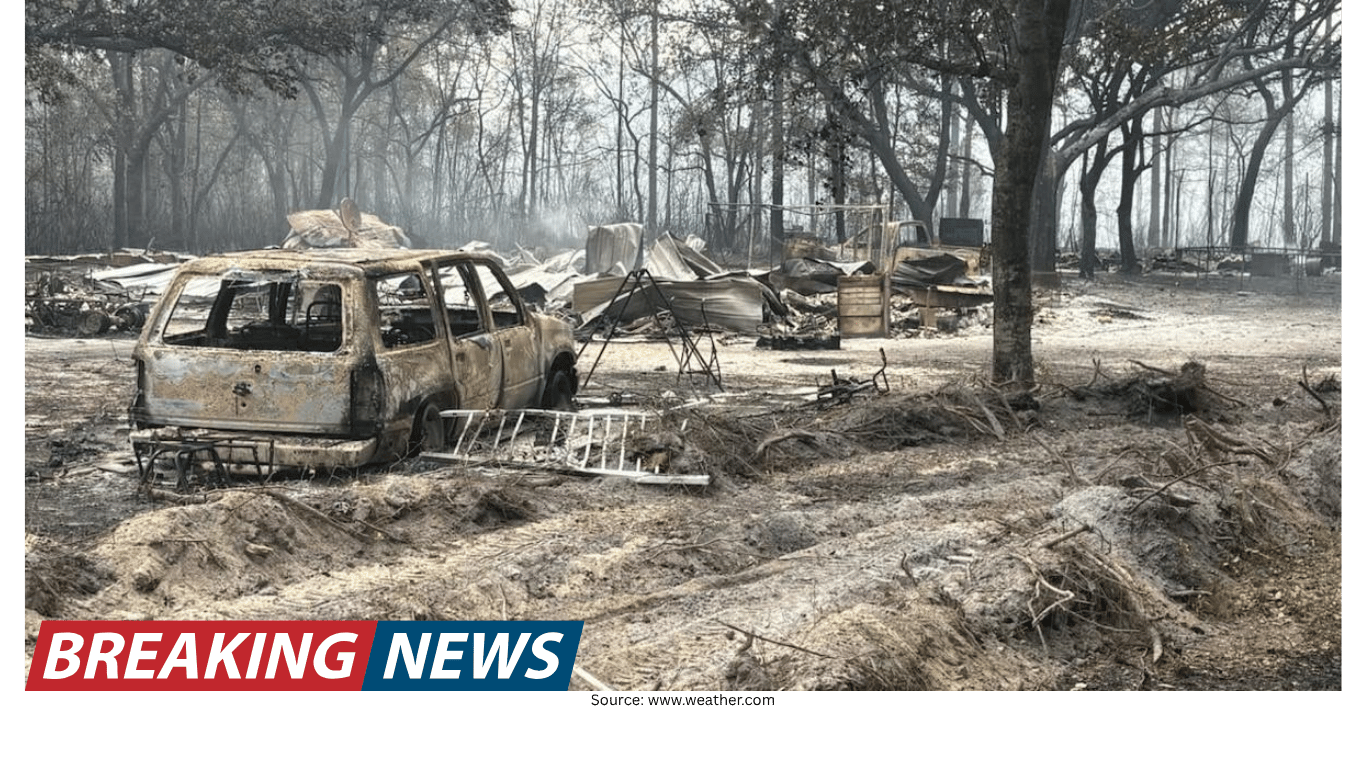
A wildfire season shaped by two forces
Southern Georgia’s wildfire situation is being driven by a combination of extreme dryness and an unusual supply of available fuel on the ground. The region is under exceptional drought—the highest level shown on the U.S. Drought Monitor—so it is not surprising that fire danger is elevated. What stands out in this case is why fires have “exploded” in terms of acreage burned: the drought is only part of the story.
Meteorologist Sara Tonks has highlighted a second factor that helps explain the scale of recent fire activity. That factor traces back to Hurricane Helene, which leveled numerous trees across south Georgia. Those downed trees did not disappear when the storm passed; instead, they remained on the landscape. In the months that followed, that storm debris became fuel—material that can burn—helping fires spread more widely when conditions turned hot and dry.
Understanding how these pieces fit together matters for anyone trying to make sense of why some wildfire seasons become more severe than others. In this situation, an exceptional drought created a highly flammable environment, while hurricane damage increased the amount of burnable material available. Together, they set the stage for fires that can grow larger than they otherwise might.
Exceptional drought: the baseline risk
Exceptional drought is the most severe drought designation on the U.S. Drought Monitor. When southern Georgia reaches that category, it signals a landscape under intense stress. In practical terms, it means the environment is much more receptive to fire: vegetation is drier, soils have less moisture, and the overall setting is primed for ignition and rapid spread.
This level of drought is not just a background detail; it is the baseline condition that makes wildfire growth more likely. Even without any additional complications, exceptional drought can support more frequent fire starts and can allow existing fires to expand. That is why it is “no surprise” that fire concerns rise when drought reaches this level.
But the recent increase in acreage burned suggests that something beyond the drought itself is influencing outcomes. Drought can make fuels easier to ignite, yet the amount and arrangement of fuel also play a major role in how big a fire becomes. That is where Hurricane Helene enters the picture.
Hurricane Helene’s legacy: trees on the ground
Hurricane Helene leveled numerous trees across south Georgia. While hurricanes are often discussed in terms of immediate impacts—wind damage, power outages, and other storm-related disruptions—Tonks’ explanation focuses on what happens after: the debris left behind.
When trees are knocked down in large numbers, they can create a broad layer of combustible material. Branches, trunks, and other woody debris can accumulate across forests, rural areas, and other landscapes. This material can persist for a long time, especially if it is not removed or broken down quickly. Under normal conditions, moisture can slow the ability of such debris to burn. Under exceptional drought, however, that same debris can dry out and become more flammable.
In other words, Helene’s tree damage did not just alter the scenery. It changed the fuel profile of the region—how much burnable material is present and how it is distributed. That shift can influence how fires behave, including how quickly they spread and how much land they ultimately consume.
Why acreage burned can rise when fuel increases
Wildfire size is often discussed in terms of “acres burned,” a measure of how much land a fire affects. The content provided points to a notable increase in acreage burned in south Georgia and connects that increase to two linked factors: extreme drought and hurricane-created fuel.
Exceptional drought can make it easier for fires to start and harder to contain them once they begin. But fires also need material to burn. When Hurricane Helene leveled numerous trees, it effectively added to the amount of fuel available. With more fuel on the ground, a fire that might have stayed smaller can find more to consume, potentially allowing it to expand across a larger area.
This is a key point in Tonks’ breakdown: the fires did not expand in acreage burned simply because it was dry. They expanded because it was dry and because the landscape had been loaded with additional combustible material by the hurricane’s tree damage.
Connecting the dots: a chain of events
Tonks’ explanation describes a chain of events that is straightforward but important:
- Southern Georgia is under exceptional drought, the highest drought category on the U.S. Drought Monitor.
- Hurricane Helene previously leveled numerous trees across south Georgia.
- Those downed trees remained on the landscape and provided fuel.
- As drought conditions persisted, fires were able to burn more acreage than might otherwise have occurred.
This sequence underscores how weather and climate-related hazards can interact over time. A hurricane is typically viewed as a discrete event, but its impacts can persist, shaping later risks. Likewise, drought can be a slow-building hazard that sets the conditions for other problems. In south Georgia, the interaction between these hazards is central to understanding why wildfire impacts have been so pronounced.
What the explanation does—and does not—claim
The information provided makes a specific, limited set of factual points. It states that southern Georgia is under exceptional drought and that Hurricane Helene leveled numerous trees, which then provided fuel for future fires. It also notes that this combination helps explain why wildfires “exploded” in acreage burned.
At the same time, the material does not provide details on the exact timing of the fires, the number of fires, the precise acreage burned, or the specific locations within south Georgia. It also does not describe suppression efforts, evacuation orders, or impacts on homes and communities. The focus is on the underlying drivers of fire growth rather than a comprehensive incident report.
That distinction matters because it keeps the discussion centered on the causal relationship Tonks highlighted: drought plus storm debris equals a higher potential for large fires. The takeaway is not a broad claim about every wildfire in the region, but a clear explanation of why conditions were favorable for fires to burn more land.
The role of meteorology in explaining compound risks
Tonks’ breakdown is an example of how meteorology can connect different hazards into a coherent narrative. Drought monitoring and storm impact assessment are often treated as separate topics. Here, they are linked: drought describes how receptive the landscape is to burning, while hurricane damage describes how much fuel is available to burn.
This kind of explanation can be especially useful for public understanding because it moves beyond a single-cause framing. When people hear that a region is in drought, they may expect elevated fire risk. What they might not immediately realize is that a prior storm can materially increase the severity of later fires by changing the amount of downed vegetation.
In that sense, the explanation is less about a surprising new hazard and more about how familiar hazards can combine. Exceptional drought is already a serious condition. Add widespread downed trees, and the potential for larger fires becomes easier to understand.
Forecasting and public communication
The provided content also includes a statement about forecast accuracy, noting that an organization is described as the world’s most accurate forecaster according to a ForecastWatch overview covering 2021–2024 and commissioned by The Weather Company. While this claim is not directly tied to the wildfire mechanism described above, it signals an emphasis on forecasting credibility in the broader context of weather communication.
In practical terms, accurate forecasting and clear explanations can help the public grasp evolving risks. Drought status, storm aftermath, and fire weather conditions are all pieces of information that can influence preparedness decisions. In this case, the main communication value comes from clarifying that wildfire growth in south Georgia is connected not only to ongoing drought but also to lingering hurricane damage in the form of downed trees.
Key points to remember
- Southern Georgia is under exceptional drought, the highest level on the U.S. Drought Monitor.
- Hurricane Helene leveled numerous trees across south Georgia.
- The downed trees provided fuel for future fires.
- According to meteorologist Sara Tonks, this combination helps explain why wildfires expanded dramatically in acreage burned.
Viewed together, these points describe a wildfire environment shaped by both immediate conditions (exceptional drought) and the longer-lasting aftermath of a major storm (trees on the ground). The result is a landscape where fires can find both the dryness and the fuel needed to grow larger.