
Mississippi Tornadoes Leave Widespread Destruction Across Central and Southern Communities
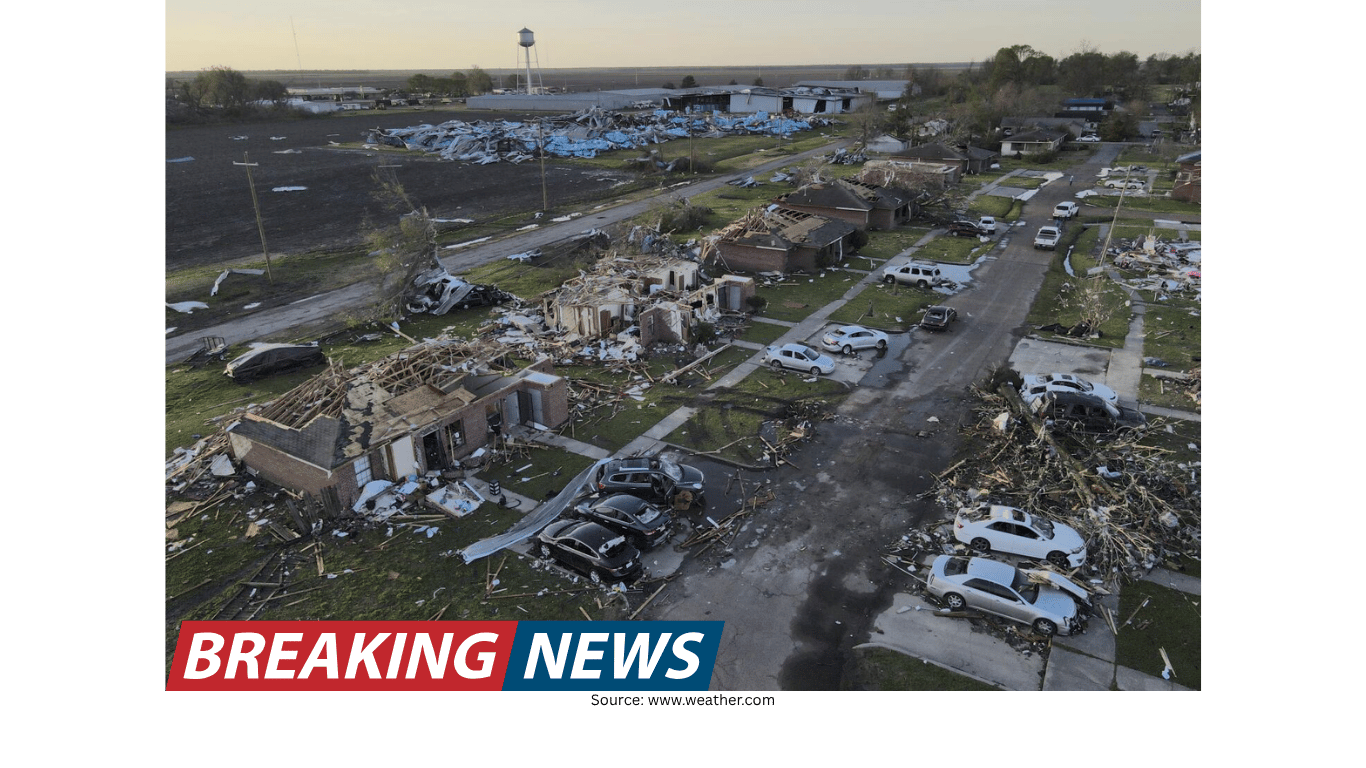
A destructive night of severe weather in Mississippi
Multiple tornadoes ripped through central and southern Mississippi on Wednesday evening, leaving behind a trail of damage that affected hundreds of buildings. The storms struck in several locations, and the cumulative impact was visible in footage that captured one damaged area after another.
While tornadoes can sometimes carve narrow paths that are difficult to grasp from the ground, the video emerging from this event conveyed something different: a sense that the destruction kept going, block after block, structure after structure. In the words of a pastor in Purvis, Mississippi, it was “just total devastation.”
That assessment came after a tornado destroyed parts of his church. His account, paired with the visuals of wrecked buildings, offered a stark snapshot of what communities in the region faced after the storms moved through.
What happened: several tornadoes, hundreds of damaged buildings
The severe weather event was not limited to a single tornado. Several twisters were reported across central and southern parts of Mississippi, contributing to the extensive damage described in the aftermath. The combined effect of multiple tornadoes can complicate the picture for residents trying to understand what happened: different neighborhoods and towns may experience different levels of impact, even within the same broad region.
In this case, the overall scale was clear from early descriptions: hundreds of buildings were wrecked. That phrase encompasses a wide range of damage, from partial structural failures to complete destruction. It also speaks to how tornado impacts can extend beyond individual homes, affecting community spaces and shared institutions as well.
Purvis: “Total devastation” after parts of a church were destroyed
Among the places hit was Purvis, where a pastor described the aftermath in blunt terms: “just total devastation.” The tornado destroyed parts of his church, a detail that underscores how tornado damage often reaches beyond private property and into the buildings that serve as gathering points for a community.
Churches, like schools, civic centers, and other public-facing structures, often become informal markers of a town’s well-being after a disaster. When they are damaged, the loss can feel especially visible and immediate. The pastor’s comment captured not only the physical destruction but also the emotional weight of seeing a familiar place altered in minutes.
Video shows damage that appears to go on without end
Incredible video from the storm’s aftermath showed a pattern that seemed never-ending. The footage conveyed a sense of continuity in the destruction, as if each new view revealed more damaged buildings. For viewers, that kind of visual evidence can be as informative as any written summary: it shows the density of damage and how quickly a tornado’s path can turn a functioning area into a debris-strewn landscape.
While still images can capture a single moment, video can reveal the scale of a scene as the camera moves through it. In this case, the moving perspective reinforced the idea that the storms did not simply strike one isolated spot, but affected multiple areas across a wide portion of the state.
Understanding the impact of multiple tornadoes in one event
When several tornadoes occur within the same general time frame, the impacts can add up quickly. Different tornadoes can touch down in different locations, or a single storm system can produce multiple twisters that affect separate communities. The result is a broader footprint of damage and a more complex recovery picture.
For residents, this can mean that news of destruction arrives from several directions at once—friends, family, and neighboring towns may all be dealing with their own damage. For local leaders and responders, it can mean multiple damaged zones that require attention simultaneously.
The reports from Mississippi fit this pattern: tornadoes were described as ripping through the central and southern parts of the state, not confined to one small area. The mention of hundreds of wrecked buildings suggests that the damage was not limited to a handful of structures, but widespread enough to affect the built environment across multiple communities.
What “wrecked buildings” can look like after a tornado
The phrase “wrecked hundreds of buildings” is broad, but it captures the reality that tornado damage often comes in many forms. Some buildings may lose roofs or exterior walls. Others may suffer shattered windows, collapsed garages, or compromised structural supports. In more severe cases, buildings can be torn apart, leaving only fragments behind.
Even when a structure is still standing, it may be unsafe to occupy until it is inspected and repaired. That is part of why tornado damage can disrupt daily life so quickly: homes, businesses, and community buildings may be physically present but functionally unusable.
The video described as showing seemingly never-ending damage suggests that the destruction extended across a long stretch, revealing repeated examples of these kinds of impacts. In such circumstances, the scale is not just measured by a single dramatic scene, but by the accumulation of many damaged properties.
Community landmarks are not immune
The destruction of parts of a church in Purvis is a reminder that tornadoes do not discriminate between types of structures. Places of worship, local businesses, and other community landmarks can be hit just as homes can. When these buildings are damaged, the community loses not only physical space but also a sense of routine and stability.
For many towns, churches serve multiple roles—regular services, community meetings, and informal support networks. Damage to these buildings can therefore have ripple effects, even beyond the immediate cost of repairs. The pastor’s description of “total devastation” reflects how quickly that sense of normal can be disrupted.
Why the visual record matters after severe weather
After tornadoes, video and photography often become a key part of how the public understands what happened. They provide documentation that can help convey urgency and scale, and they can also serve as a record of conditions in the immediate aftermath.
In this Mississippi event, the video was described as “incredible,” not because the situation was positive, but because it vividly illustrated the extent of the damage. The sense that the destruction “seems neverending” is difficult to communicate in words alone; visuals can make that point instantly.
At the same time, images can only show what is in frame. The broader story—multiple tornadoes, hundreds of buildings affected, and a community leader describing devastation—helps place those visuals in context.
A snapshot of a larger severe-weather reality
Tornadoes are among the most intense forms of severe weather, and they can cause major destruction in a short period of time. The Mississippi tornadoes described here illustrate several recurring features of these events: rapid onset, widespread damage, and the way impacts can extend across multiple communities when more than one tornado occurs.
The details available from this incident are enough to outline the core reality: several tornadoes struck central and southern Mississippi on Wednesday evening; hundreds of buildings were wrecked; and in Purvis, a tornado destroyed parts of a church, prompting a pastor to describe the scene as “just total devastation.”
Those elements together paint a picture of a severe and consequential event—one that left physical damage visible across the landscape and emotional shock evident in the words of people who saw the destruction firsthand.
Key points from the event
- Several tornadoes were reported across central and southern Mississippi on Wednesday evening.
- Hundreds of buildings were wrecked, indicating widespread structural damage across the affected areas.
- In Purvis, a pastor described “just total devastation” after a tornado destroyed parts of his church.
- Video from the aftermath showed damage that appeared to stretch on and on, reinforcing the scale of the destruction.
What comes through most clearly
Even with only a handful of confirmed details, the overall message from this event is unmistakable: the tornadoes left extensive damage across a broad portion of Mississippi, and the destruction was severe enough to be described in absolute terms by a local pastor surveying what happened to his church.
The combination of eyewitness description and sweeping video evidence helps explain why the damage felt so overwhelming. For the communities in central and southern Mississippi, the aftermath was not a single isolated incident, but a widespread scene of wrecked buildings and disrupted lives.
As the state’s affected areas take stock of what was lost and what can be repaired, the images and accounts from Wednesday evening stand as a clear record of the tornadoes’ force and reach.