
Kilauea Eruption Sends Lava Fountains Skyward, Prompts Temporary Closures at Hawaii National Park
An eruption that stood out, even for Kilauea
Hawaii’s Kilauea volcano is known for erupting more frequently than almost any other volcano on Earth. That reputation is built on repeated episodes of volcanic activity that, while often closely monitored and sometimes disruptive, are part of an ongoing pattern at one of the planet’s most active volcanic systems.
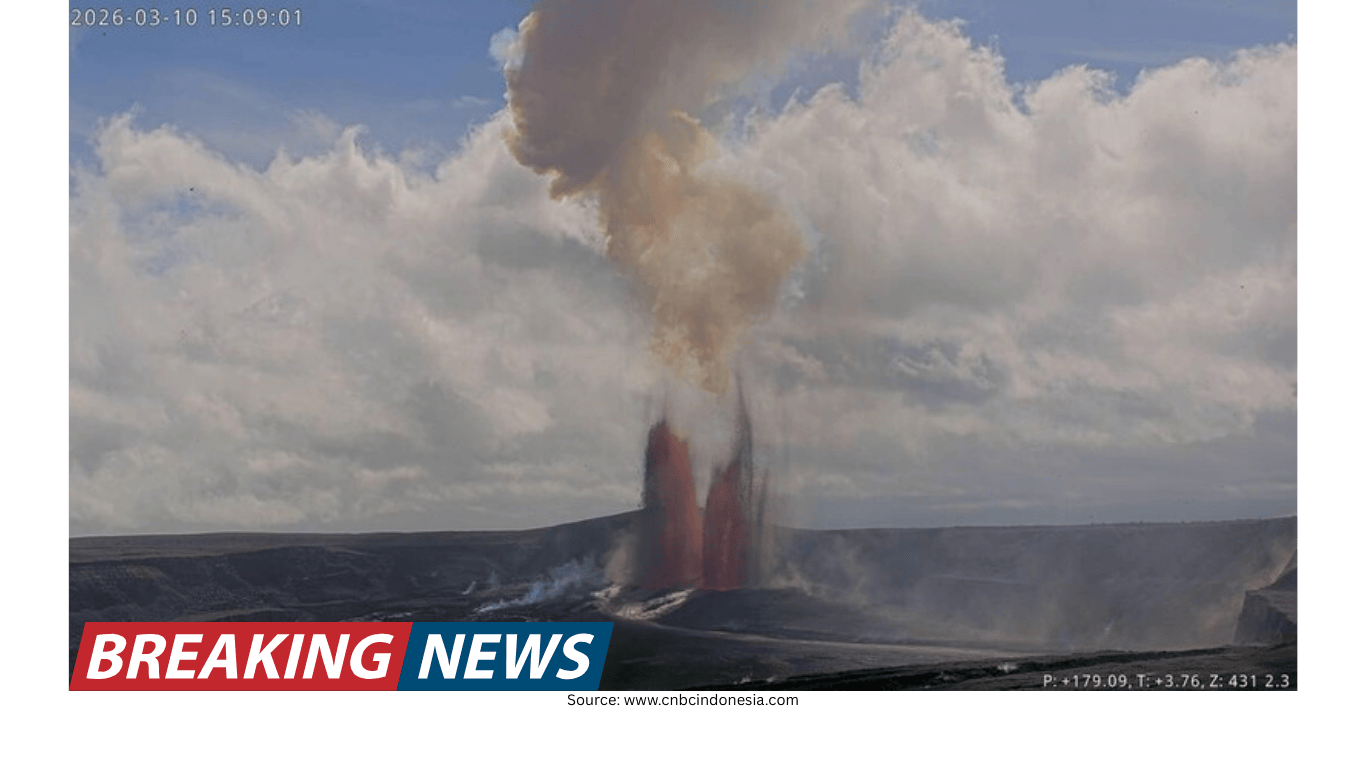
Yet Tuesday’s eruption was described as different. The defining feature was the scale of the lava fountains: jets of molten rock rising to about 1,000 feet. Even at a volcano accustomed to regular activity, that kind of vertical reach is notable, and it quickly became the central detail of the episode.
The eruption’s intensity had immediate practical consequences. The lava fountains were responsible for temporarily closing parts of a national park in Hawaii, underscoring how quickly conditions can shift when an active volcano enters a more dramatic phase.
What happened: 1,000-foot lava fountains and rapid response
Tuesday’s episode featured lava fountains reaching roughly 1,000 feet high. Lava fountains are a visible sign of eruptive activity, and their height can signal a particularly energetic phase. In this case, the fountains were tall enough to be singled out as a key reason the event stood apart from more typical activity at Kilauea.
Because the eruption occurred in a setting where public access is an ongoing consideration, the response included temporary closures at a national park. These closures are a common tool used during volcanic events: they reduce the risk to visitors and staff when hazards may be present or when conditions can change quickly.
While Kilauea’s frequent eruptions can sometimes create a sense of familiarity, Tuesday’s eruption served as a reminder that “frequent” does not mean “predictable” in terms of intensity or immediate impacts.
Why temporary closures matter during volcanic activity
Temporary closures at a national park can be disruptive for visitors, but they are also a clear indicator that officials are prioritizing safety during a dynamic natural event. Volcanoes can present multiple hazards, and even when an eruption is being monitored, the most responsible approach is often to limit access until conditions stabilize.
In this case, the closures were tied directly to the lava fountains. Fountains of that height can draw attention, but they also signal that the eruption is forceful enough to prompt caution. The decision to close areas temporarily reflects the reality that a national park is both a destination and a managed environment where risk must be actively assessed.
For travelers, closures can mean altered itineraries, delayed plans, or the need to rely on official updates. For park managers, they represent a balancing act: maintaining access when possible while acting decisively when the situation requires it.
Kilauea’s broader context: a very active volcano
Kilauea is widely recognized as one of the most active volcanoes on Earth, erupting more frequently than almost every other volcano globally. That high level of activity means eruptions are not rare events in the way they might be at less active volcanoes. Instead, Kilauea’s behavior is often characterized by repeated episodes that can vary in duration, visibility, and impact.
However, the frequency of eruptions does not eliminate the possibility of unusual events. Tuesday’s eruption was described as different specifically because of the towering lava fountains. That detail highlights an important point for anyone following volcano news: an active volcano can produce a range of outcomes, from relatively modest activity to more dramatic displays that require immediate operational changes such as closures.
For the public, the combination of a frequently erupting volcano and a national park setting creates a unique situation. Volcanic landscapes can be a major draw, but they also require continuous monitoring and a readiness to adjust access based on real-time conditions.
Implications for visitors: planning around an active volcano
When volcanic activity leads to temporary closures, it can affect how visitors experience a national park. Some may arrive expecting full access, only to find that certain areas are restricted. Others may be drawn by the news of an eruption but encounter limitations designed to keep people at a safe distance.
Tuesday’s eruption illustrates how quickly conditions can change. A volcano that erupts often may still produce an episode that is intense enough to reshape park operations, even if only for a limited period. For travelers, this underscores the value of flexibility: plans may need to adapt to closures, and viewing opportunities may depend on what areas remain open.
It also reinforces the importance of respecting restrictions. Temporary closures are not simply administrative decisions; they are responses to a natural event that can evolve rapidly. The presence of 1,000-foot lava fountains is a compelling visual detail, but it is also a signal of powerful forces at work.
Understanding the “different” factor in Tuesday’s eruption
The description of Tuesday’s eruption as different invites a closer look at what sets one eruptive episode apart from another at a highly active volcano. In this case, the standout feature was the height of the lava fountains—around 1,000 feet. That measurement provides a concrete way to understand the scale of the event without requiring specialized terminology.
At a volcano where eruptions are relatively common, public perception can sometimes drift toward normalization: people may assume that an eruption is routine or manageable simply because it happens often. But the height of these fountains suggests a level of intensity that warranted immediate attention and operational changes at the national park.
In practical terms, the “different” factor is not just about spectacle. It is about consequences: the eruption’s characteristics were significant enough that access had to be restricted temporarily. That link between natural activity and public safety measures is the most direct way to understand why this episode mattered.
Safety and access: the role of park management during eruptions
National parks that include active volcanic areas operate under unique conditions. They must accommodate visitors while also preparing for natural events that can occur with limited warning. Kilauea’s frequent activity makes this an ongoing challenge rather than an occasional one.
Temporary closures are one of the clearest tools available. They allow officials to respond quickly to changing conditions, whether the concern is the immediate area around an eruption or the broader implications of heightened activity. In this case, the closures were tied to the lava fountains, which were described as reaching 1,000 feet.
From a management perspective, closures are also a way to buy time: time to assess conditions, time to monitor ongoing activity, and time to determine when and how areas can safely reopen. For visitors, the takeaway is that access decisions are closely connected to real-time observations of the volcano’s behavior.
What this eruption signals for public awareness
Even without additional technical details, the basic facts of Tuesday’s eruption carry a message about public awareness. Kilauea is among the most frequently erupting volcanoes on Earth, but it can still produce events that stand out—events that are intense enough to prompt temporary closures at a national park.
That combination of frequent activity and occasional standout episodes is part of what makes volcanic areas both fascinating and challenging. They draw interest because they are active, but that same activity requires caution and a willingness to adapt.
For residents, visitors, and anyone following developments, the key point is straightforward: an eruption is not just a headline. It can have immediate operational effects, including restricted access to public lands, even if those restrictions are temporary.
Key points at a glance
- Kilauea is one of the world’s most frequently erupting volcanoes.
- Tuesday’s eruption was described as different due to lava fountains reaching about 1,000 feet.
- The lava fountains led to temporary closures at a national park in Hawaii.
- The event highlights how quickly conditions can change and why access restrictions may be necessary.
A reminder of nature’s variability at a familiar volcano
Kilauea’s frequent eruptions can make volcanic activity feel like an expected part of life and travel in Hawaii. But Tuesday’s episode—marked by lava fountains rising to around 1,000 feet and triggering temporary closures at a national park—demonstrated that even a well-known, often-active volcano can still surprise in scale and impact.
The closures were temporary, but the underlying lesson is enduring: in volcanic landscapes, conditions can shift quickly, and public access may change just as fast. For anyone planning a visit or tracking the eruption, the most reliable approach is to treat official restrictions as an essential part of experiencing a powerful natural environment responsibly.